



2026 Ford Maverick vs 2026 Hyundai Santa Cruz
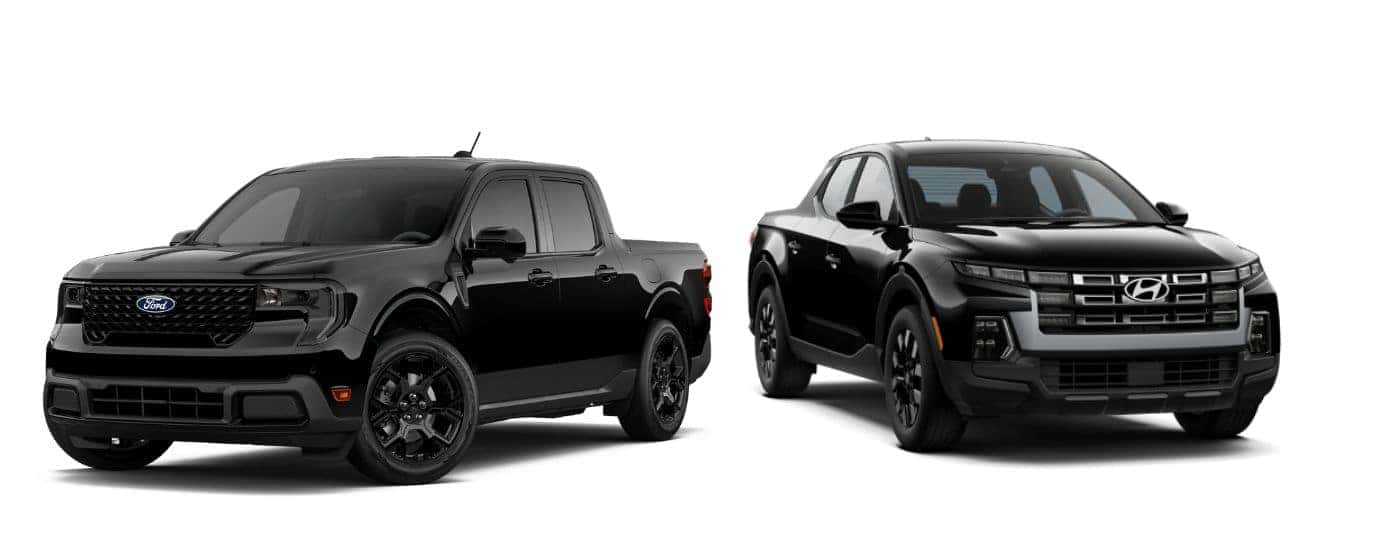
If you are looking for a compact truck, you’ve likely considered the 2026 Ford Maverick vs 2026 Hyundai Santa Cruz. This makes sense, as both options offer effortless maneuverability in tight spaces, streamlined styling, and the functionality of a truck without the heft—or price—of a full-size option.
Still, when comparing the two, there is one standout favorite, and our team here at DePaula Ford is proud to say it is the Maverick. Even better? We have various trims of the latest version in stock, ensuring you’re able to find the ideal fit for your driving routine. Plus, we take the time to answer any questions you might have along the way.
You can find our inventory here on our website or stop by the dealership today. Either way, we’re excited to help. For now, keep reading to learn more about how these two trucks compare.
| 2026 Ford Maverick | VS | 2026 Hyundai Santa Cruz |
|---|---|---|
| $27,145[a] | MSRP | $29,750 |
| 33.3 cu.ft. | Cargo Space | 27 cu.ft. |
| 42/35 | MPG city/hwy | 22/30 |
| 13.2 in | Screen Size | 12.3 in |
Two Takes on the Compact Truck

The 2026 Ford Maverick and the 2026 Hyundai Santa Cruz both target shoppers who want a truck that is easier to park, easier to live with, and easier to justify than a larger pickup. In this matchup, though, the Maverick is the stronger overall choice because it aligns more closely with many drivers’ priorities.
The Maverick offers affordability, fuel economy, and practical utility. It is also designed with a bed that is built for real-world hauling, while the Santa Cruz leans more toward a polished, lifestyle-oriented feel. While that extra polish is nice, it’s not what a buyer who wants a smart daily driver that can also handle light work is looking for.
Lower Starting Price, Stronger Value Story
First things first, it is worth mentioning that the 2026 Ford Maverick has a starting MSRP of $27,145, while the Santa Cruz’s MSRP is $29,750. This lower cost of entry gives the Maverick an immediate advantage for shoppers who are trying to keep monthly payments, insurance, and overall ownership costs in check.[a]
Also worth noting is that the Maverick’s base trim already offers the standard hybrid powertrain, FLEXBED storage system, a 13.2-inch center display, SYNC 4, and selectable drive modes. In other words, the base trim offers a complete package from the start. The Santa Cruz, on the other hand, doesn’t offer the same kind of complete package for a buyer who values practicality first due to its higher price point.
Midrange Trims

The value advantage is reinforced by how Ford packages the Maverick’s midrange trims. The XLT adds cubby storage, four additional bed tie-downs, and a standard 2K trailer hitch receiver with a four-pin connector, which means the truck becomes more useful without forcing you into a luxury-minded trim level.
The Santa Cruz does offer appealing equipment on higher trims, and it can feel more refined in day-to-day use, but the Maverick still comes out on top because its most useful features show up early and stay focused on the job at hand. For a shopper comparing cost against usefulness, Ford’s formula is more convincing.
A useful way to think about the matchup is that the Maverick gives you the essentials first and the extras second. That is a better fit when you want a truck that can serve as a daily commuter, a light-duty hauler, and an affordable ownership proposition all at once.
Standard Hybrid Efficiency for Everyday Driving
Efficiency is where the Maverick pulls even farther ahead. As mentioned above, it has a hybrid powertrain available even on the base trim. According to EPA estimates, you can expect to get 42 MPG in the city and 35 MPG on the highway, giving you 38 MPG combined in front-wheel drive form. In addition, its hybrid powertrain offers 191 horsepower.
You can also choose the hybrid option with all-wheel drive, which also delivers strong fuel economy. That kind of efficiency is a real advantage for a truck that will be used for commuting, running errands, and doing small jobs rather than hauling heavy loads every day. Finally, a 2.0L EcoBoost turbocharged I-4 is an option if you do not want the hybrid powertrain. This engine may not be as efficient, but it offers an impressive 250 horsepower, giving the Maverick some serious performance.
The Santa Cruz, by contrast, is built around conventional gas engines only. That lack might cause drivers to lean toward the Maverick on its own, but when you realize that the Santa Cruz’s base 2.5L I-4 has the same 191 horsepower as the Maverick with far less fuel economy—25 MPG combined—the decision becomes even clearer.
At the end of the day—or the gas tank—the Maverick supports the idea of one vehicle that can handle weekday driving without making every mile feel expensive. Add that to the fact that the truck is less expensive, and it is easy to see why it is often considered the better choice for many drivers.
Daily Driving Experience
The same logic continues throughout the daily-driving experience. The Maverick’s hybrid setup lowers the cost of regular commuting, and its available all-wheel drive helps it stay versatile when weather or road conditions change.
Meanwhile, the Santa Cruz can feel more planted or more upscale depending on the trim, but it has less to offer the buyer who is not looking for the fanciest compact truck, but is looking for the one that makes the most sense. Because the Ford Maverick blends efficiency, affordability, and genuinely useful hardware so cleanly, it remains the better choice from both a practical and financial perspective.
Useful Bed Space and Flexible Cargo Handling
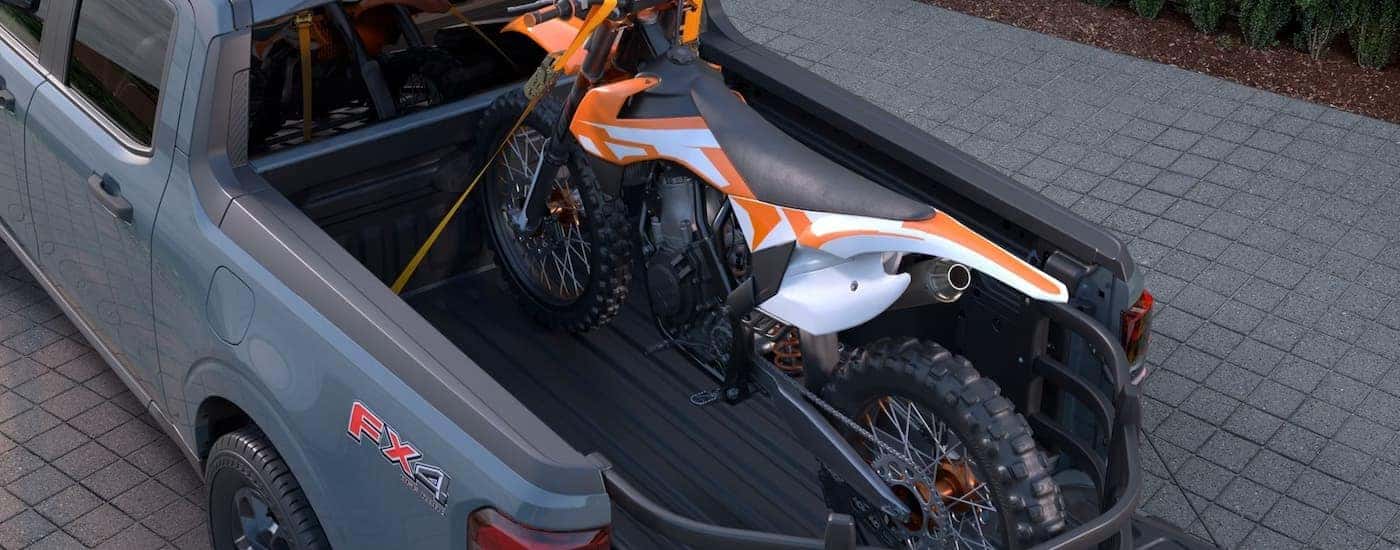
A compact truck still needs a functional bed, and the Maverick simply does that better than the Santa Cruz. The Maverick is equipped with a bed that is 54.4 inches long compared to the 52.1-inch length of the Santa Cruz’s bed.
Additionally, the Maverick has a bed volume of 33.3 cubic feet, while the Santa Cruz offers 27 cubic feet. That is a meaningful difference for shoppers who need to haul mulch, lumber, tools, camping or sports gear, or boxes without needing to graduate to a larger truck.
Ford also enhances the Maverick’s utility with its FLEXBED system. Essentially, the bed of the truck is designed for easy cargo management with multiple tie-down points, a multi-position tailgate, and accessory-friendly organization. It also offers other useful touches, such as cubby storage and extra tie-downs in the bed.
For the Santa Cruz, there are some good ideas at play, including an integrated tonneau cover on some trims and a lockable under-bed storage compartment. But while those features might be nice to have, the Maverick remains the better overall truck because it combines more bed volume with a more adaptable, load-friendly layout that better suits the work-and-weekend lifestyle of many of today’s drivers.
Practical Equipment That Keeps the Maverick Ahead of the Pack
The Maverick’s advantage isn’t just about powertrain and bed capability. It also shows up in how the truck is equipped for everyday use. For instance, you will find a standard 13.2-inch display front and center on the dash, giving you access to many of the controls you need while driving from point A to point B. Then there’s the signature SYNC infotainment system with wireless Apple CarPlay and Android Auto, as well as an onboard Wi-Fi hotspot.
For the 2026 Santa Cruz, the standard display is only 12.3 inches. While the difference might not seem like that big of a deal, it matters for drivers who want to get the most out of their investment, as the smaller display also comes with a larger price tag.
Something else to consider is that the Ford Maverick is capable of being flat-towed, while the Santa Cruz is not. This can be an issue for RV drivers who want to have a truck along with them for running quick errands into town or checking out the off-road trails around their campsite.
Speaking of off-road trails, you will find that both the 2026 Ford Maverick and the 2026 Hyundai Santa Cruz offer selectable drive modes and off-road-ready trims. However, the lower price tag of the Ford is hard to ignore, making it the better option to consider when looking for the better, all-around truck.

Check Out the 2026 Ford Maverick
In the end, the Maverick’s advantage comes from how consistently it supports today’s drivers’ priorities. It is the less expensive option from the start and is more naturally configured for everyday usefulness than the Santa Cruz. For shoppers who want a compact truck that works hard during the week, offers impressive fuel efficiency, and still leaves room for weekend projects, the 2026 Ford Maverick simply makes the most sense.
You can find our selection of new Maverick models online or stop by our Albany dealership to find the right fit for your unique needs. Either way, we’re excited to help you take the next step. Check out the 2026 Ford Maverick today to see how it fits into your daily driving routine!
