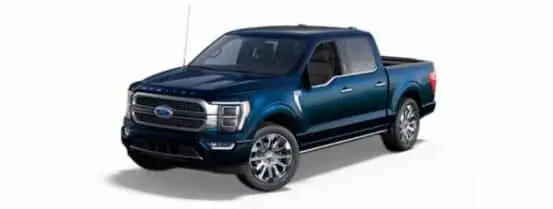
Starting at
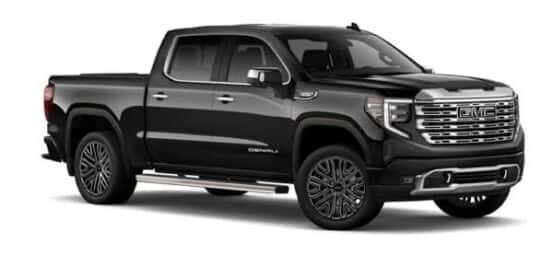
Starting at
| 14,000 | Max Towing (lbs) | 13,000 |
| 3,315 | Max Payload (lbs) | 2,240 |
| 265-570 | Torque (lb-ft) | 383-495 |
Full-size trucks are integral to the American landscape, embodying the grit associated with the ongoing pursuit of the American dream. When you need a reliable work partner that can do the heavy lifting, a truck will never disappoint. Ford and GMC showcase this reliability in their lineups, adding brute strength and jaw-dropping capability with a healthy selection of innovative technologies, luxuries, and conveniences. The combination is incredible and remarkably different when you slate models like the 2023 Ford F-150 vs 2023 GMC Sierra 1500 against each other.
GMC’s reputation for luxury precedes the 2023 Sierra 1500 and matches its higher starting MSRP of $37,200, a significant increase over the 2023 F-150 at $33,695.[a] This leads to an essential question, “What price do you put on luxury?” With the Sierra burning more fuel even with its standard powerplant, you’ll also spend more money at the pump than you will from behind the wheel of the F-150.
While GMC’s penchant for luxury may have drawn you to the Sierra 1500 initially, comparing it with the 2023 F-150 sheds light on what many Ford fans already know. Luxury and ingenuity are integral to the Blue Oval brand and are prominent throughout the F-150’s lineup in 2023. Moreover, Ford doesn’t require you to pay a premium for comforts, conveniences, and advanced technologies that promise to transform your experience behind the wheel. That starkly contrasts what GMC asks with the 2023 Sierra 1500’s higher starting price.
How can you decide what luxury means and what you’re willing to pay for a capable yet luxurious workhorse? Answering those questions starts by looking closer at your options. Here’s an in-depth look at the critical differences between the 2023 F-150 and the 2023 Sierra 1500, with results sure to surprise you.
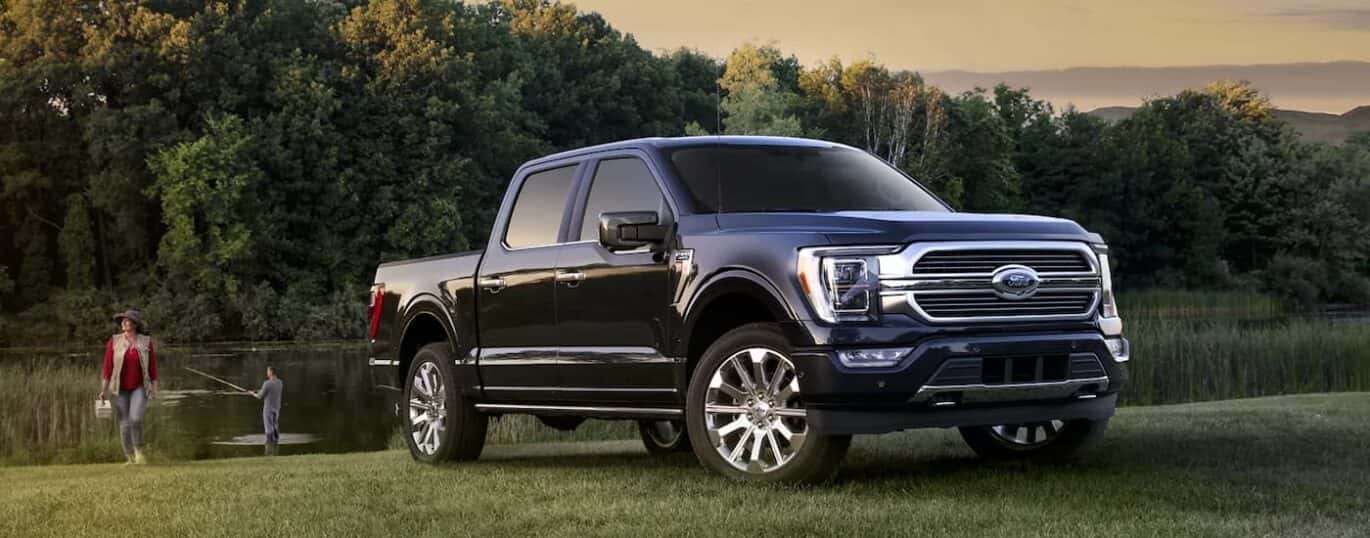
The 2023 GMC Sierra 1500 promises high-value packaging and seems to deliver until you compare it to models like the 2023 Ford F-150. Comparing the base trims better illustrates how the automakers uniquely define “value.” Ford gives drivers all the necessities and more without skyrocketing the F-150’s price tag, but GMC doesn’t find this balance with the latest Sierra 1500. How so?
The Sierra 1500 Pro starts the GMC lineup for 2023 at $37,200, starkly contrasting the F-150 XL at $33,695.[a] The nearly $4,000 more you’ll spend on the Sierra 1500 must mean you’re getting more features, but that isn’t the case. Instead, the Sierra 1500 Pro is an entry-level model equipped with GMC’s 2.7L turbocharged high-output engine, LED lighting, a seven-inch infotainment system, and the GMC Pro Safety suite. The safety suite outfits the truck with Automatic Emergency Braking, Lane Keep Assist with Lane Departure Warning, Forward Collision Alert, a Following Distance Indicator, IntelliBeam automatic high beams, and Front Pedestrian Braking. As a gateway into the Sierra 1500’s lineup, the Pro’s interior is minimal, with vinyl seating and flooring, basic instrumentation, and single-zone climate control.
Ford takes a different approach to the entry-level F-150 XL by equipping it with more standard features that prove drivers don’t have to compromise even on a base model. The F-150 XL is powered by Ford’s proven 3.3L V6 engine and comes with a variety of advanced technologies. For example, its eight-inch center display is home to the renowned SYNC 4 infotainment system, which offers intuitive smartphone integration and access to a FordPass Connect 4G LTE WiFi hotspot. The display is also home to the truck’s rear view camera and Dynamic Hitch Assist, but that’s only part of the tools working behind the scenes to optimize your visibility and keep you safe behind the wheel.
The F-150 XL introduces more advanced features that prioritize your safety and engineer confidence in the driver’s seat. These tools range from cruise control and a tire pressure monitoring system to Post-Collision Braking, Pre-Collision Assist with Automatic Emergency Braking, a Reverse Sensing System, and integrated technologies like AdvanceTrac with Roll Stability Control. Adding tools like Ford’s Lane-Keeping System, Trailer Reverse Guidance, and a Blind Spot Information System with Cross-Traffic Alert and Trailer Tow Coverage doesn’t come at a premium.
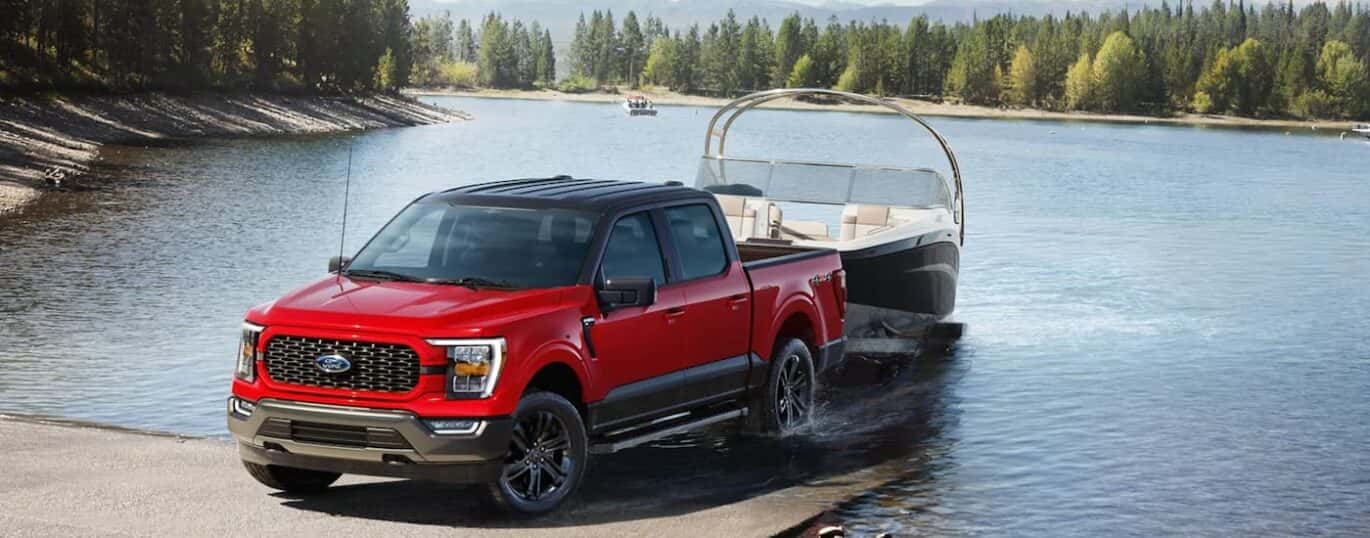
Ford and GMC take a similar approach to the F-150 and Sierra 1500 by offering expansive lineups with multiple configurations and numerous powertrains in 2023. The Sierra’s four-engine lineup is impressive, but it’s quickly outshined and outperformed by the F-150’s five powertrains that are more potent, capable, and surprisingly more efficient. How is this possible?
The Sierra 1500 comes standard with a 2.7L turbocharged inline-four engine and eight-speed automatic transmission that produces 310 horsepower and 420 lb-ft of torque. The base powerplant gains a lead over the F-150’s standard 3.3L V6, which produces 290 horsepower and 265 lb-ft of torque. However, it quickly loses that lead because you’re not only spending more on the Sierra, but you’ll also spend more filling its tank. The four-wheel drive Sierra 1500 averages 18 MPG in the city and 20 MPG on the highway with the base powertrain, compared to the F-150 at 19 MPG and 22 MPG, respectively, which keeps more of your hard-earned money in your wallet.
The F-150 maintains its lead over the Sierra 1500, with GMC completing its engine lineup with a pair of EcoTec 3 V8s and a Duramax Turbo-Diesel. While the 5.3L and 6.2L EcoTec3 V8s produce anywhere from 355 to 420 horsepower and up to 460 lb-ft of torque, they burn a lot of fuel and send the Sierra 1500’s average fuel economy to 16 MPG in the city and 21 MPG on the highway on rear-wheel models and 15 MPG and 19 MPG, respectively, on four-wheel drive models. Moreover, even with the higher output and the option of adding the Duramax turbo-diesel, which produces 495 lb-ft of torque, the Sierra 1500 sees a maximum towing capacity of 13,000 pounds and a payload limit of 2,240 pounds.
Despite offering a V6-heavy powertrain lineup, the F-150 excels in every way. The 2.7L EcoBoost Turbo V6 holds its own, delivering 325 horsepower and 400 lb-ft of torque with an average fuel economy of 20 MPG in the city and 26 MPG on the highway. The more potent 3.5L EcoBoost Turbo V6 delivers 400 horsepower and 500 lb-ft of torque, pushing the F-150 to its highest towing capacity of 14,000 pounds. Finally, Ford completes its lineup with a 5.0L Coyote V8 engine and a 3.5L PowerBoost Turbo V6 Hybrid, which ensures the F-150 maintains its lead by producing 430 horsepower and 570 lb-ft of near-instant torque with an average of 25 MPG in the city and on the highway.
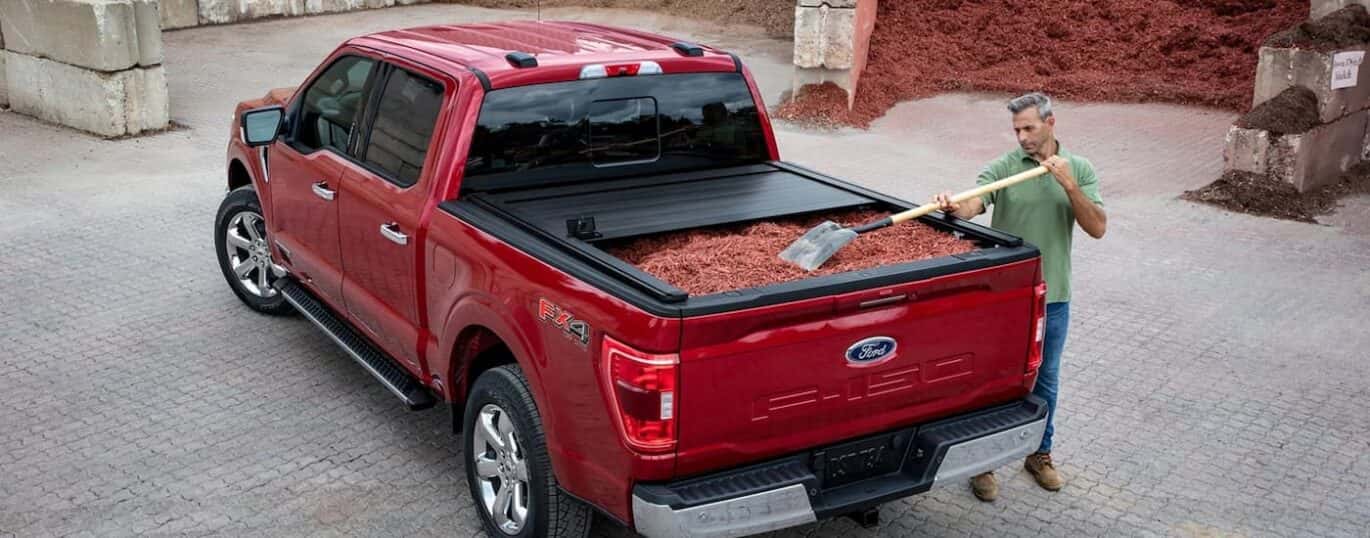
The 2023 Sierra 1500 and 2023 F-150 are designed as reliable work partners that can help make your job easier. But, while their purposes are the same, the delivery is different. GMC and Ford take unique approaches in how they equip their best-selling trucks to help you get every job done.
The Sierra 1500 offers GMC’s MultiPro Tailgate, which extends the functionality of the traditional tailgate with six unique features. With various load stops and gates, you can secure longer items in the bed, create a flat work surface, or take advantage of a full-width step. In addition to the tailgate, you can outfit the Sierra 1500 with the CarbonPro carbon fiber composite bed that offers the most short-bed volume in its class at 62.9 cubic feet. As far as trailering, you can expect the basics with GMC’s trailering package that equips the truck with a trailer hitch, Hitch Guidance, and available upgrades like an integrated trailer brake controller.
While the Sierra 1500’s tailgate and CarbonPro bed are impressive, the F-150 adds functional features and technologies that will improve your towing and cargo-hauling experience. These tools include Pro Power Onboard, which gives you the option of three available power outputs (2.0kW, 2.4kW, and 7.2kW) that transform the truck into a power source wherever you are. The various outputs can power everything from work tools to a television, gaming console, or microwave.
Ford doesn’t stop there and includes many cargo and trailering-specific features, like Smart Hitch, Onboard Scales, Smart Trailer Tow Connector, Dynamic Hitch Assist, and blind spot monitoring with trailer coverage. Smart Hitch estimates the trailer weight on the tongue, projecting the data via the FordPass app, the SYNC 4 display, or the Smart Taillamps. Onboard Scales works similarly, estimating the truck’s payload so that you can confidently haul every load.
Tools like the Smart Trailer Tow Connector and Dynamic Hitch Assist minimize the guesswork of hitching up to and towing a trailer. Dynamic Hitch Assist makes hitching up as easy as watching the on-screen guide on the center display, while Smart Trailer Tow Connector alerts you to problems with your trailer, like lighting or battery issues. Lastly, tools like the Blind Spot Information System with Trailer Coverage add a virtual spotter to the F-150, extending your visibility by watching your blind spots around the truck and trailer.

Your search for the perfect truck might’ve started with the 2023 GMC Sierra 1500, but we anticipate it will end with you behind the wheel of the 2023 Ford F-150. Ford doesn’t require drivers to compromise or settle for less to satisfy their budgets, and instead, delivers a high-value lineup that offers something for everyone. We share that approach at DePaula Ford, your Ford destination and automotive home away from home.
We’re incredibly proud to carry the Ford lineup and welcome you into the DePaula Ford family. Those who shop with us gain access to our state-of-the-art facility, where we can handle everything from helping you find the perfect F-150 to overseeing routine oil changes or more complex repairs. With everything you need under one roof and a team committed to integrity and transparency, we deliver a first-class experience every step of the way.
*Images, fuel economy, and other stats, may reflect higher trim levels, options, or features that may result in a higher cost from the starting MSRP.
MSRP excludes tax, license, registration, additional options, and possible destination charges. Dealers set own prices.