



2026 Ford Explorer vs 2026 Toyota Highlander: Which Three-Row SUV Fits Modern Family Life Better?
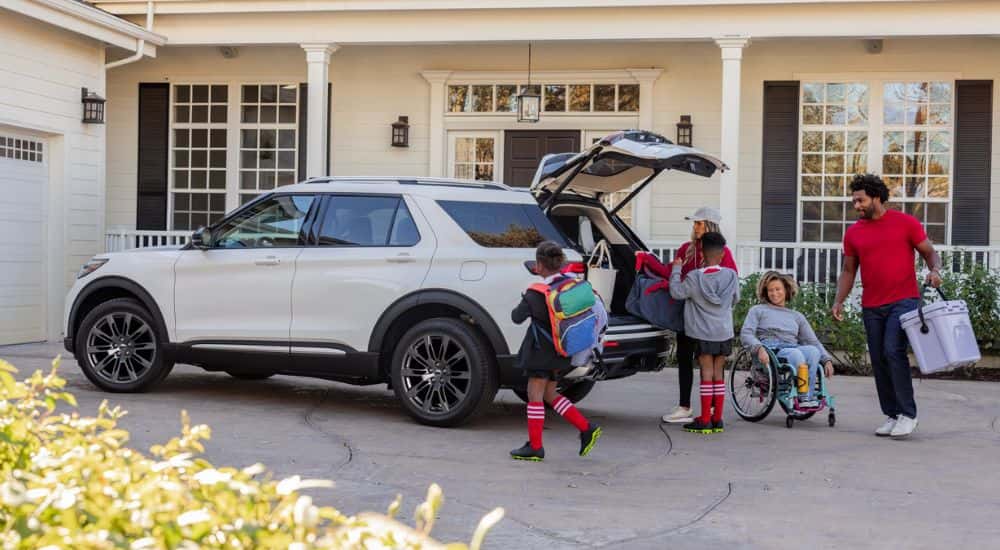
Three-row SUVs have become the default choice for many growing families because they offer something smaller SUVs simply can’t: extra passenger room, flexible cargo space, and the ability to comfortably handle everything from school pickups to long-distance road trips. However, buyers shopping in this segment today want more than practicality alone. Many families also want strong performance, modern technology, confident highway driving, and an SUV that doesn’t feel bland behind the wheel.
That’s exactly why the comparison between the Ford Explorer and the Toyota Highlander is so interesting.
Both SUVs offer three-row seating, modern safety systems, and family-friendly versatility, but they approach the segment differently. The Highlander focuses heavily on comfort, efficiency, and Toyota’s reputation for reliability, while the Explorer emphasizes stronger performance, more athletic handling, and greater versatility for active families.
For buyers debating the 2026 Ford Explorer vs 2026 Toyota Highlander, the Explorer ultimately stands out as the more exciting and well-rounded choice for families who want practicality without sacrificing driving enjoyment. So today, let’s settle the debate once and for all and answer the question: which three-row SUV should you buy? Let’s get started!
Performance and Driving Experience: The Explorer Feels More Powerful and Athletic
One of the clearest differences between these SUVs appears the moment you step on the accelerator.
The standard 2026 Ford Explorer comes equipped with a 2.3L EcoBoost turbocharged I-4 engine producing 300 hp and 310 lb-ft of torque. That gives the Explorer noticeably stronger acceleration than many competitors in the segment, especially during highway merging and passing situations.
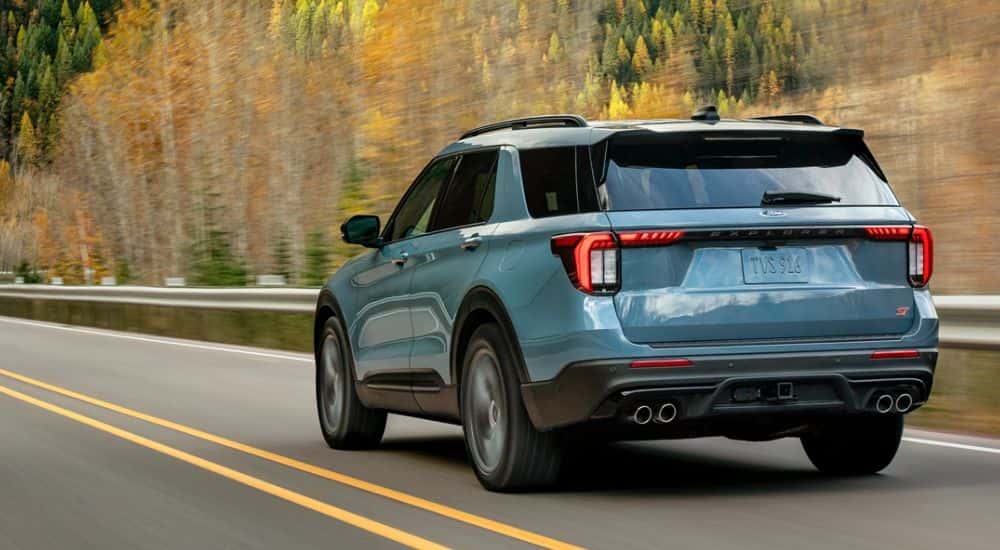
Ford also continues to offer its performance-focused ST model, which uses a 3.0L EcoBoost V6 producing 400 hp and 415 lb-ft of torque. That kind of power is rare in the mainstream three-row SUV segment and immediately helps separate the Explorer from more comfort-oriented competitors. It’s worth noting that the Platinum and Tremor also use this upgraded V6 engine.
The Toyota Highlander, meanwhile, prioritizes efficiency and smoothness over outright performance. Its turbocharged 2.4L I-4 engine produces 265 hp and 310 lb-ft of torque. While that setup delivers respectable everyday drivability, it doesn’t feel nearly as energetic or responsive as the Explorer’s available powertrains.
The Explorer’s rear-wheel-drive (RWD) platform also contributes to its more athletic feel. Compared to the Highlander’s all-wheel-drive-based setup, the Explorer feels more balanced and composed through curves and during higher-speed driving situations.
The Better Towing Experience
That difference matters for families who spend significant time on highways or regularly travel with passengers and cargo onboard. The Explorer feels more confident under heavier loads and generally more engaging during everyday driving.
Towing capability further reinforces the Explorer’s advantage. The Explorer tows up to 5,000 lbs, providing families with enough capacity for campers, small boats, utility trailers, and recreational equipment. The Highlander also reaches a maximum towing capacity of 5,000 lbs, but opting for the HEV powertrain lowers this to 3,500 lbs. Ultimately, the Explorer’s greater strength, combined with its rear-wheel-drive-based architecture, helps it feel more composed while towing.
The Highlander remains smooth and easy to drive, but buyers who don’t want their family SUV to feel underpowered or overly soft will likely find the Explorer much more appealing.
Interior Space and Cargo Flexibility: Both SUVs Handle Family Life Well
Both SUVs succeed where family vehicles absolutely must: passenger comfort and interior versatility.
The Explorer offers seating for up to seven passengers and provides a spacious cabin layout that feels open throughout all three rows. The passenger room is generous, particularly in the second row, while access to the third row feels relatively straightforward for families regularly carrying children or additional passengers.
Cargo flexibility is another major strength for the Explorer. Behind the third row, the Explorer offers 16.3 cu.ft of cargo space, slightly more than the Highlander’s 16 cu.ft. That additional room may not sound like a lot, but it’s better to have it than not need it during grocery runs, family vacations, or busy weekends filled with sports equipment and luggage.
Folding the third row expands Explorer cargo capacity to 46 cu.ft., while folding both rear rows opens up a maximum of 85.8 cu.ft. of cargo space. The Highlander reaches 84.3 cu.ft. With both rear rows folded, it remains practical but still falls short of the Explorer’s overall cargo flexibility.
Cabin Comfort
The Highlander still performs well from a practicality standpoint. Toyota designed the cabin with comfort and family usability in mind, creating a straightforward interior layout that feels approachable and easy to live with every day.
Both SUVs work extremely well for commuting, carpools, and family travel. Still, the Explorer’s stronger cargo capacity and more spacious overall feel give it an edge for buyers seeking maximum versatility.
The Explorer also benefits from a more performance-oriented personality overall. Instead of simply feeling like a practical people mover, it balances family-friendly space with stronger road presence and more confident driving dynamics.
Technology and Safety Features Keep Both SUVs Modern
Technology has become a major deciding factor for many SUV shoppers, and both Ford and Toyota equip their SUVs with strong infotainment and safety features.
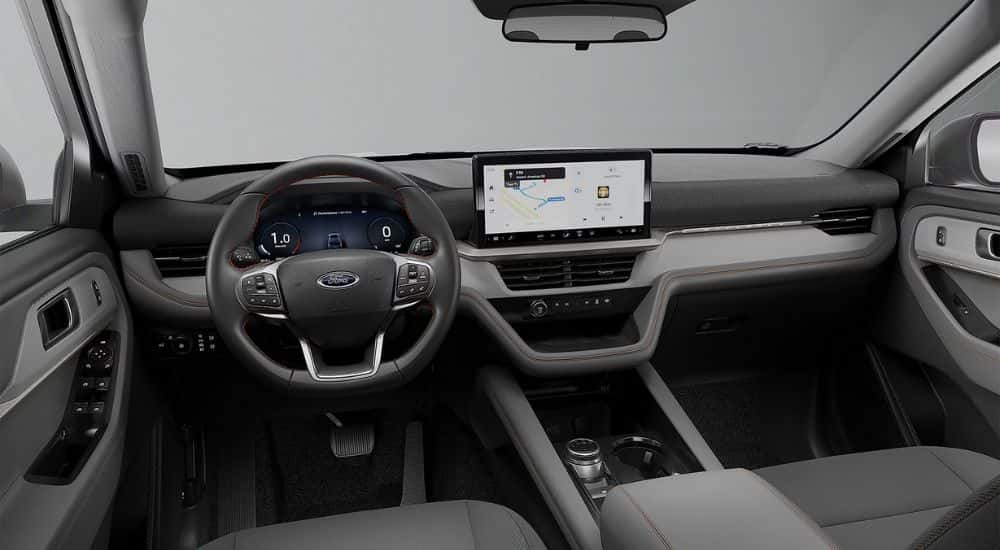
The Explorer features Ford’s SYNC infotainment system along with a standard 13.2-inch touchscreen on every trim level. That immediately gives the Explorer a more modern, upscale technology presentation compared to the Highlander, which offers either an 8-inch or an available 12.3-inch touchscreen, depending on the trim. Buyers seeking a larger, more user-friendly infotainment setup right from the start will likely appreciate Ford’s approach.
In addition to the larger screen, you’ll enjoy all the staples you’d expect: Wireless Apple CarPlay and Android Auto compatibility, digital driver displays, and available premium audio systems courtesy of Bang & Olufsen (B&O). These features help the Explorer feel modern and connected without becoming overly complicated. Sure, you’ll find broadly equivalent, or even sometimes identical, features in the Highlander. Ford’s employee-pricing initiatives can also help make the Explorer an even stronger value proposition for many buyers while maintaining the same luxury and tech.
Staying Safe With Ford
In addition to connectivity, entertainment, and comfort, Ford Co-Pilot360 technologies help add confidence during daily driving. Features like Adaptive Cruise Control, Blind Spot Information Systems, Lane Keeping Systems, and Pre-Collision Assist all support safer highway driving and complicated commuting situations.
Toyota counters with its Toyota Safety Sense suite, which includes many of the same core driver-assistance technologies buyers now expect in modern family SUVs. Adaptive cruise control, lane-tracing assistance, blind-spot monitoring, and collision mitigation systems all help the Highlander remain highly competitive in terms of safety.
Both SUVs perform well here, but the Explorer’s technology presentation feels slightly more modern and performance-oriented overall. The larger standard infotainment screen especially helps the cabin feel more upscale and driver-focused compared to the Highlander’s lower-trim setup.
That difference reflects the overall approach of both vehicles. Toyota prioritizes comfort and predictability, while Ford focuses more on blending practicality with stronger driver engagement.
Why the Explorer Feels More Versatile for Active Families
Many families today expect one SUV to handle nearly everything. The same vehicle may commute to work during the week, transport sports equipment on weekends, carry luggage during vacations, and occasionally tow recreational gear or trailers.
That’s where the Explorer feels especially well-rounded.
The stronger engine lineup, athletic handling, and spacious interior help make the Explorer feel capable across a broader range of situations than the Highlander. Families who enjoy road trips, outdoor activities, towing, or simply driving something that feels more responsive will likely appreciate the Explorer’s personality more.
The available Explorer ST, Platinum, and Tremor trims also give buyers something genuinely uncommon in this segment: a family SUV with real performance credentials. With 400 hp, the Explorer feels both practical and legitimately exciting behind the wheel.
The Highlander remains an excellent family SUV in its own right. It’s comfortable, dependable, efficient, and easy to drive. However, it leans more heavily toward predictability and comfort than toward versatility and driver engagement.
For some buyers, that softer and calmer personality works perfectly well. But for families who still enjoy driving and want their SUV to feel confident and energetic during daily use, the Explorer stands out much more clearly.
The Explorer Delivers a Better Balance of Family Practicality and Performance
The 2026 Ford Explorer and 2026 Toyota Highlander are both strong choices in the competitive three-row SUV segment. The Highlander continues offering the comfort, practicality, and dependable reputation many buyers expect from Toyota.
However, when comparing the 2026 Ford Explorer vs. the 2026 Toyota Highlander, the Explorer delivers a more complete and engaging overall experience.
Its stronger engine options, available 400 hp ST model, larger cargo flexibility, rear-wheel-drive-based platform, larger standard 13.2-inch infotainment display, and more athletic driving feel help it stand out for buyers who want more than basic family transportation.
For families looking for a three-row SUV that can confidently handle commuting, road trips, towing, and everyday responsibilities while remaining powerful and enjoyable to drive, the 2026 Ford Explorer stands out as the more exciting and versatile overall choice.

0 comment(s) so far on 2026 Ford Explorer vs 2026 Toyota Highlander: Which Three-Row SUV Fits Modern Family Life Better?