



Ford Mustang Mach-E vs VW ID.4: Choosing the Most Driver-Centric EV
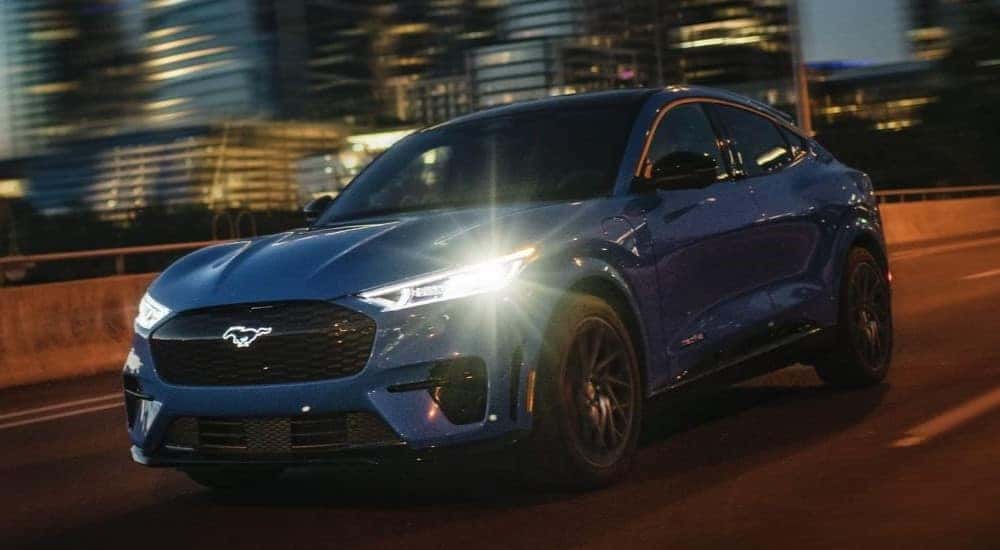
The automotive industry stands at a critical crossroads, with technology increasingly becoming a determinant of the driving experience. Entering 2024, consumers seek more than mere transportation; they demand vehicles that deliver comfort, convenience, and seamless digital integration with their smartphones and smart home devices. We’ve officially entered a new high-tech era in the automotive industry, and there’s no looking back. This shift in expectations has prompted manufacturers, including industry pioneers like Ford and Volkswagen, to equip their cars with advanced features that were unimaginable just a few years ago.
In response to evolving demands, electric vehicles have surged to the forefront of innovation, offering features that set new benchmarks for automotive technology. Comparing the 2024 Ford Mustang Mach-E vs 2024 Volkswagen ID.4 showcases how the integration of electric powertrains with cutting-edge software can enhance the driving experience. This shift towards electrification is not just about reducing emissions but also about redefining what consumers expect from their vehicles in critical areas, such as performance, safety, and connectivity.
The rise of connected vehicle technology has transformed cars into mobile command centers, enabling drivers to interact with their vehicles in ways previously confined to science fiction. From over-the-air updates that refine vehicle functionality overnight to advanced driver assistance systems that promise a safer journey, the automotive industry is leveraging technology to create a more intuitive and engaging driving experience. The question is, which carmaker has dialed in the most in-demand features: Ford or Volkswagen?
Core Comfort and Convenience Technologies
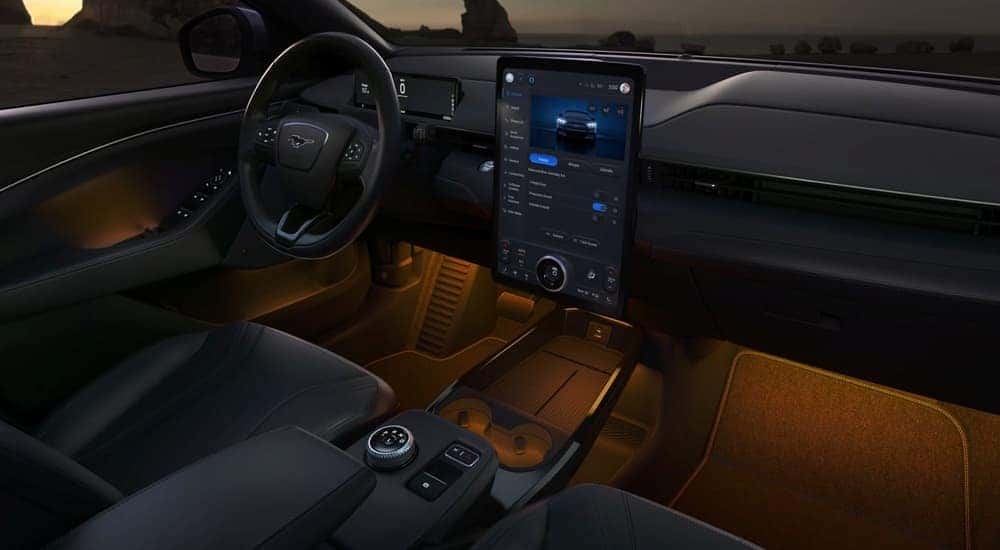
The era of basic AM/FM radios has been supplanted by comprehensive multimedia hubs providing navigation, real-time traffic updates, weather alerts, streaming services, and easy one-touch device connectivity. Upsized infotainment systems now dominate the modern vehicle’s interior, as evidenced by the Mach-E’s massive standard 15.5-inch screen, which dwarfs the ID.4’s 12-inch display. Touchscreen interfaces have evolved in size and sophistication, offering intuitive controls and robust personalization options. Similarly, advancements in voice recognition technology enable drivers to issue commands without diverting their attention from the road.
Vehicles have become part of the Internet of Things, offering app-based services ranging from remote start and vehicle diagnostics to emergency assistance and stolen vehicle tracking. Over-the-air (OTA) updates offered by Ford’s SYNC 4A software revolutionize maintenance for the Mach-E, enabling the automaker to upgrade vehicle software remotely and bypass dealership visits. In fact, Ford’s SYNC 4A operating system leads the industry in predictive technology, even offering drivers intuitive suggestions for destinations based on history and driver behavior. The 2024 Mach-E represents Ford’s smartest-ever EV and illustrates how carmakers are blurring the line between manufacturer and software developer.
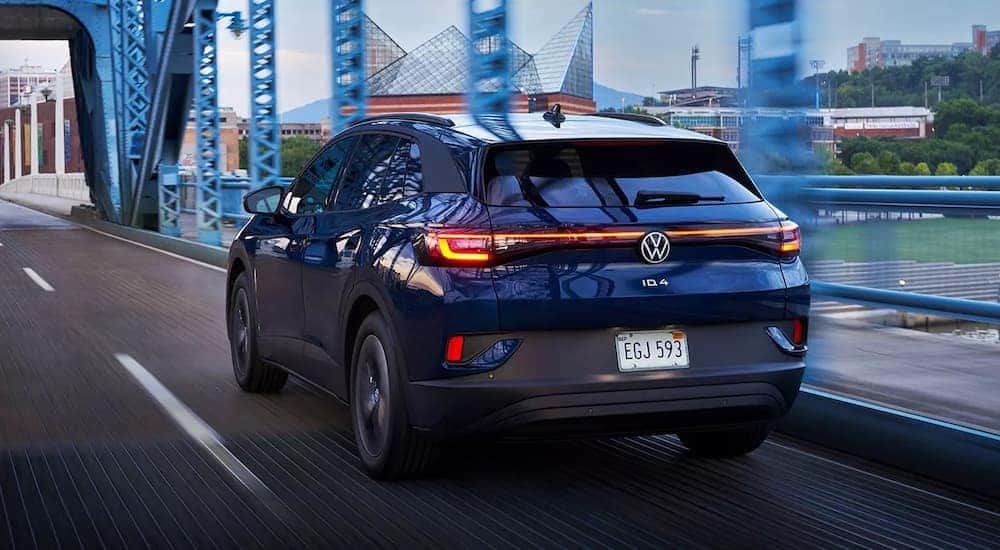
Volkswagen’s attempt to offer a similar software-defined experience ran into headwinds, with initial buyers of the ID.4 reporting countless issues with everything from charging to infotainment and basic vehicle functions. Glitchy infotainment systems create headaches for drivers and, in some cases, lead to distraction. Anyone who has fiddled with a smartphone connection while driving 65 mph down the highway can attest to the challenge of on-the-fly troubleshooting. Since then, VW has updated its software for the ID.4 numerous times, although some major updates were not available over the air and had to be manually installed at the dealership. The updates also haven’t fully solved the software issues, with the 2024 ID.4 receiving an all-new 4.0 system that is not compatible with older models.
Top-of-the-line 2024 VW ID.4 models will also start offering a larger touchscreen––12.9 inches, to be exact––but buyers will have to fork over roughly $45,000 to get a model with the larger display and accept that its Car-Net operating system is all-new and may have similar issues to the older VW software. The 2024 Mach-E has not seen major changes to its software, continuing to use the proven SYNC 4A infotainment system. Also, Ford’s decision to mount the 15.5-inch screen vertically frees up space on the dash for a larger digital driver display and orients the screen comfortably in the driver’s line of sight.
Electric Vehicle-Specific Features
Electric vehicles boast sophisticated battery management systems that optimize range and longevity. These systems can precondition the battery to ideal operating or charging temperatures, enhancing efficiency and performance. Regenerative braking, a defining feature of electric vehicles, converts the kinetic energy usually lost when braking back into stored energy in the vehicle’s battery. This technology conserves energy and contributes to the distinctive driving experience of EVs, with one-pedal driving gaining popularity among everyday drivers.
For the 2024 model year, the Mach-E comes standard with a 72 kWh battery and rear-wheel drive. However, a 91 kWh battery and all-wheel drive are available options. The estimated range tops out at over 300 miles on a single charge. The 2024 ID.4, by contrast, only achieves an estimated range of 291 miles with rear-wheel drive and its available 82 kWh battery, or 263 miles when buyers opt for all-wheel drive. It’s a big improvement from the 2023 model, which only offered 275 miles of range, but still well below the Mach-E. Both cars come with fast-charging capability, a feature that buyers demand to minimize the dreaded “range anxiety” that comes with sluggish charging.
Improvements in advanced driver assistance systems (ADAS) have introduced features like adaptive cruise control, lane-keeping assist, and automated parking assist. Ford takes it a step further with BlueCruise, a hands-free cruise control system offered on the 2024 Mach-E that allows drivers to “set it and forget it.” Engaging BlueCruise automates lane changes, triggers automatic speed adjustments based on traffic conditions, and mitigates driver fatigue by allowing fully hands-free operation. Volkswagen offers an ADAS feature called Travel Assist, but it only provides limited steering assistance rather than true hands-free driving.
A New Era of Automotive Excellence
It’s evident that newer EVs like the Ford Mustang Mach-E are designed not just for transportation but as sophisticated digital, connected environments catering to buyers who lean toward a tech-rich driving experience. Still, technologies like ADAS make a solid case for more traditional drivers to consider opting for an EV. Enhanced safety via sonar, radar, and cameras offers an extra set of eyes, which, when combined with app-based technologies that let drivers lock and unlock their doors or remote-start their cars on chilly mornings, quickly morphs into much-desired convenience.
With electric cars at the forefront of the automotive technological revolution, it’s up to legacy automakers like Ford to integrate cutting-edge technologies that redefine driver expectations. As the industry continues to evolve, the future of driving promises enhanced comfort, convenience, connectivity, and sustainability. Volkswagen focused on upping performance for its 2024 ID.4, adding a few extras in its high-end trims, like a premium Harman Kardon audio system, but with top-of-the-line MSRPs hovering around $55k, could the German automaker be missing out on the entry-level market?
For 2024, Ford maintains a base model price of around $40k for the Mach-E without stripping it of desirable features, a move the automaker hopes will continue attracting new buyers to the EV sector. However, if you want more, Ford provides new options like the GT Bronze appearance package and the Rally Edition. Driving range is another issue on most buyers’ minds when considering an EV. Ford trounces Volkswagen with the Mach-E’s standard and available range and capitalizes on the legendary Mustang name to remind buyers that buying a Mustang Mach-E means becoming part of an automotive legacy.

0 comment(s) so far on Ford Mustang Mach-E vs VW ID.4: Choosing the Most Driver-Centric EV