



Midsize or Full-Size? Which Used Truck Option Is Right for You?
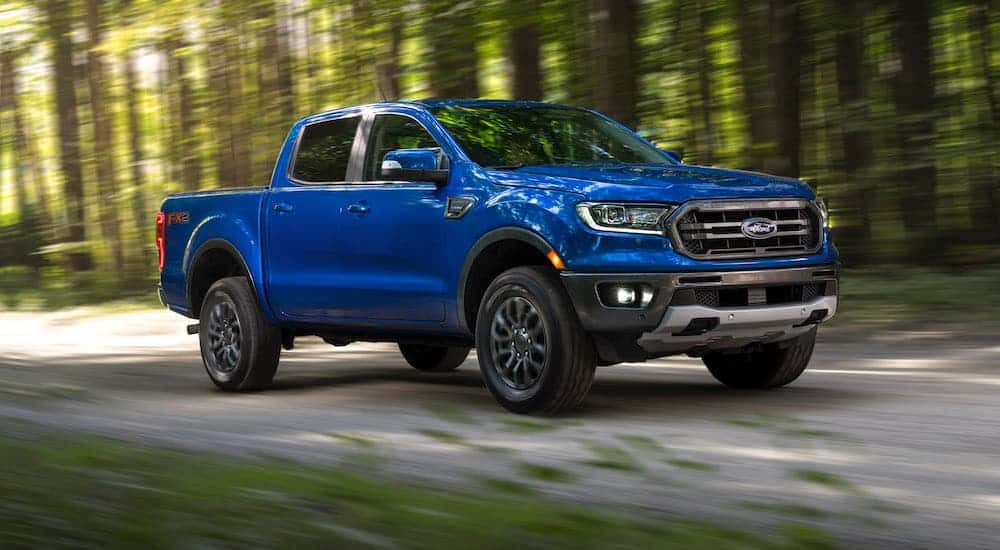
If you’re looking at used trucks for sale near Latham, you’ll have to make one major decision: What size truck do you need? It might not seem like a big deciding factor now, but midsize and full-size trucks offer very different benefits across a wide range of brands.
If you get a full-size truck but don’t really need it, you could find yourself managing more frame than you can handle, without utilizing the extra power. If you get a midsize truck and discover that the choice was misguided, you might find yourself struggling to tackle daily tasks.
Today, we’re going to provide an overview of the common differences between midsize and full-size trucks across top brands like Ford, Chevrolet, Honda, Jeep, and Toyota. We’ll be looking primarily at model years 2021 through 2023 to remain relatively recent, as they will be equipped with all the modern features you’re looking for in your next pre-owned truck.
A Look at Fuel Efficiency
Plan on taking long drives along Route 9? Then fuel economy might be something that matters to you. Evaluating the efficiency of used midsize versus full-size trucks is surprisingly complex. At first glance, it can seem like midsize trucks would be the obvious choice for those concerned about fuel costs, due to their smaller frames. However, surprisingly, if you look at the numbers, full-size trucks for recent year models boast impressive fuel economies compared to their midsized counterparts.
Let’s look at the 2022 models. A Ford F-150 from this year achieves up to 25 MPG in the city and 25 MPG on the highway, while the Ranger from the same year achieves 21 MPG in the city and 26 MPG on the highway. A Chevy Silverado sees 23 MPG in the city and 31 MPG on the highway, while the Colorado sees just 20 MPG in the city and 30 MPG on the highway. The Toyota Tundra enjoys 20 MPG in the city and 24 MPG on the highway, while the Tacoma gets 20 MPG in the city and 23 MPG on the highway. Noticing a pattern here?

The reasons that full-size trucks can get better fuel economy than midsize trucks, or numbers that are nearly identical, are varied. One, for example, is that some full-size trucks (like the F-150) have hybrid options, while their midsize siblings do not. Full-size trucks often also have turbocharged or diesel options, as well as cylinder shut-off systems to preserve fuel. Many would also be surprised to find that full-size truck frames aren’t so much larger than midsize ones that it would cause a major dip in fuel economy.
There’s something else to consider for your long drives around Latham: electric vehicle (EV) availability. There are actually more full-size EVs than midsize ones. For example, there’s an EV Ford F-150, known as the F-150 Lightning, which has been available since 2022, but there is no electric midsize Ranger. There’s a Silverado EV (available since 2024), but no Colorado EV. If you’re willing to move into the EV space, fuel economy will no longer be a concern.
Maneuverability
If maneuverability is your main concern, a midsize truck will be best. Midsize trucks will have smaller footprints, making them ideal for those who need to fit into small parking spots or navigate narrow roads. Depending on the bed size you choose for your full-size truck, the rear could extend several feet past that of a midsize truck. That means those smaller parking spots would be off-limits for you.
If you’re new to truck life, you might also find a midsize truck less intimidating to start off. Maneuvering these smaller trucks can feel closer to what you’re used to than a full-size truck. If you’re on the fence about size and this is your first truck, we might recommend the midsize for now while you get accustomed to commanding this body style. Keep in mind that when you lose overall size and heft, you lose capabilities, so you’re looking at lower payload and towing capacities, which we’ll cover next.
Towing, Payload, and Overall Power
How you plan to use your truck in your daily Latham travels can also help guide your decision. Full-size trucks do offer higher towing and payload figures than mid-size trucks, across the board. So, if you know you need to tow large equipment or vessels for your work or recreation, it’s important to be aware of these numbers.
Let’s look at the F-150, for example, which can tow up to 14,000 lbs for the 2021 through 2023 model years. The Ford Ranger, on the other hand, can tow just up to 7,500 lbs, so you’ll enjoy nearly double the towing figures in the full-size F-150 compared to the midsize Ranger.
This trend continues amongst the other brands. The GMC Sierra 1500, for example, can tow between 11,800 and 13,200 lbs between the 2021 and 2023 model years. Meanwhile, the Canyon’s towing figures top out at 7,700 lbs. The full-size Toyota Tundra can tow between 10,200 lbs and 12,000 lbs between its 2021 and 2022 models. The Tacoma tops out at 6,800 lbs.
The Honda Ridgeline (a midsize truck) can only tow 5,000 lbs. Honda doesn’t currently make a full-size truck, so there’s no comparison to be made. However, the Ridgeline is a popular midsize model. Generally speaking, your midsize trucks can only tow roughly half of what your full-size trucks can, so they’re fine for small equipment (think small campers or trailers), but they won’t be able to tow major vessels, like for commercial or industrial work.
Bed/Cab Options
Truck shoppers often consider a range of bed/cab options like short, regular, or long beds, as well as regular, double, or crew cabs. However, if you’re looking at midsize trucks, those options will be limited. The GMC Canyon, Honda Ridgeline, and Jeep Gladiator only have one bed size option. The Ford Ranger, Chevy Colorado, and Toyota Tacoma all offer two bed sizes. The Ford Ranger and Chevy Colorado each offer a couple of cab sizes, too. If you want more control over how much space you dedicate to passengers and cargo, you’ll find more options across the full-size trucks.
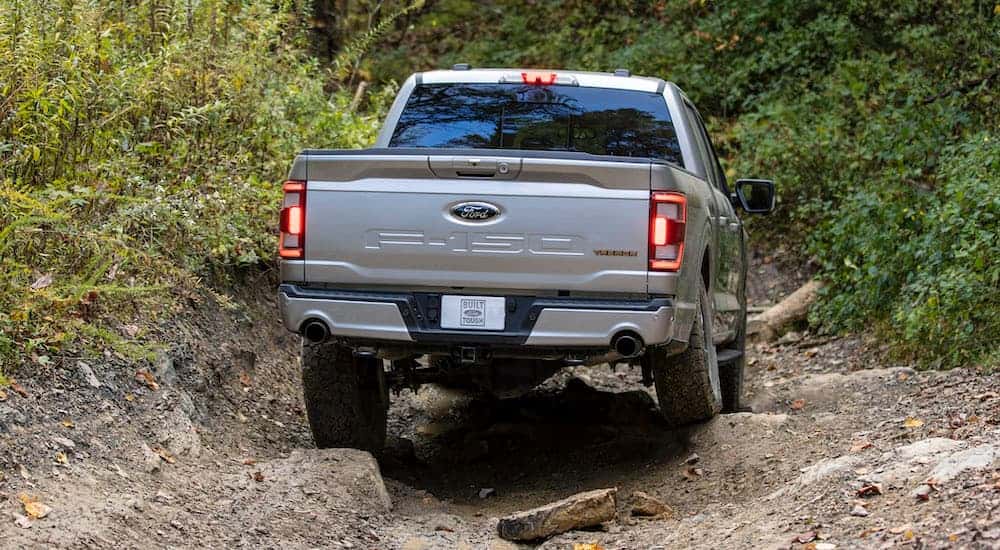
Get Behind the Wheel of a Perfectly-Sized Used Pickup That’s Just Right for Your Needs
Hopefully, this guide helped you gain a better understanding of what size truck will be best for your needs. Overall, you’ll see more options in full-size pickups, including more engine options (like EV powertrains), and more bed/cab configurations. Midsize trucks will be easier to maneuver on narrow streets and park in small spots. They might also cost a bit less than a full-size truck.
Keep in mind that full-size trucks typically offer nearly twice the towing power and more payload capacity. So if you need to tow large vessels (think more than 8,000 lbs), you’ll need a full-size pickup. When you’re ready to take one of these models for a spin or learn more about your options, visit us at DePaula Ford! We have tons of pre-owned trucks in various sizes from the popular brands you’ve been looking for!

0 comment(s) so far on Midsize or Full-Size? Which Used Truck Option Is Right for You?