



The Lasting Legacy of the SUVs That Defined the 2000s
The 2000s were a breakthrough decade for the SUV segment. While the designation has been around for more than 50 years, it was the turn of the second millennium that really saw SUVs come into their own and steadily supplant sedans as the go-to option for many drivers. A lot has changed in the last quarter-century. While some popular SUVs like the Pontiac Aztek, Nissan Xterra, and Ford’s heavy-duty Excursion have ridden off into retirement, there are still plenty of 2000s-era favorites to be found when you visit your local used car dealer near Amsterdam. Updated for the modern era, these SUVs are packed with all the latest comfort, convenience, and safety technology, not to mention hybrid and EV powertrains, as well as hands-free driving technology that was still the stuff of science fiction at the dawn of the 21st century. Let’s get into a little SUV history, see how the segment has evolved over the last few decades, and learn which popular 2000s models are still going strong as we enter the 2026 model year.
Tracking SUV Trends
The first “SUV” was actually a station wagon, but it was produced by a familiar name that would soon become a fixture in the adventure-ready segment. Designed to accommodate both passengers and their cargo, the 1946 Willys Jeep Station Wagon brought something entirely new to the market with its 4WD chassis and a spacious, seven-passenger cabin. The brand would continue to refine the SUV formula with the CJ (“Civilian Jeep”), which would evolve into the modern Wrangler. While the legendary Ford Bronco would give it some stiff competition, it was Jeep that actually coined the SUV category with the release of the 1974 Cherokee.
SUVs continued to grow in popularity throughout the 1990s as safety, fuel economy standards, and changing tastes combined to drive sales. Larger SUVs were perceived to be safer than your average passenger vehicle, which led to something of an arms race in the segment. As more SUVs began to appear on the road, smaller sedans, wagons, and minivans began to feel a little undersized. SUVs were also a great option for growing families thanks to their size and cargo-carrying ability, and benefited from a little-known loophole that allowed them to circumvent strict fuel economy standards. These factors led models like the Ford Explorer to explode in popularity, with the midsize SUV logging over 2.4 million sales between 2000 and 2010. The Explorer might have been the segment’s poster child, but high-end models like the Cadillac Escalade, Hummer H2, and Range Rover were also four-wheeled status symbols, conveying an air of rugged sophistication and earning a place in the pop cultural zeitgeist.
Interesting trends emerged as the decade progressed. While the “bigger is better” ethos ruled the road for much of the 1990s and early 2000s and created a fertile market for body-on-frame SUVs, the pendulum eventually began to swing in the opposite direction as drivers embraced a new generation of smaller, more efficient models built on a unibody platform. These crossover models, such as the Toyota RAV4, combined the utility and cargo space of a traditional SUV with the efficiency and car-like handling of a smaller vehicle. While early crossovers debuted as early as 1996, the class truly gained momentum in the mid-2000s. Several reasons contributed to the shift, including high gas prices and the economic challenges arising from the 2008 recession. Still, the crossover craze certainly didn’t end as things began to stabilize. According to some studies, crossover SUVs now represent almost 50% of all U.S. vehicle sales, up from just 10% in 2005.
Ford Explorer
Sales (2000 to 2009): 2.4 million
Then
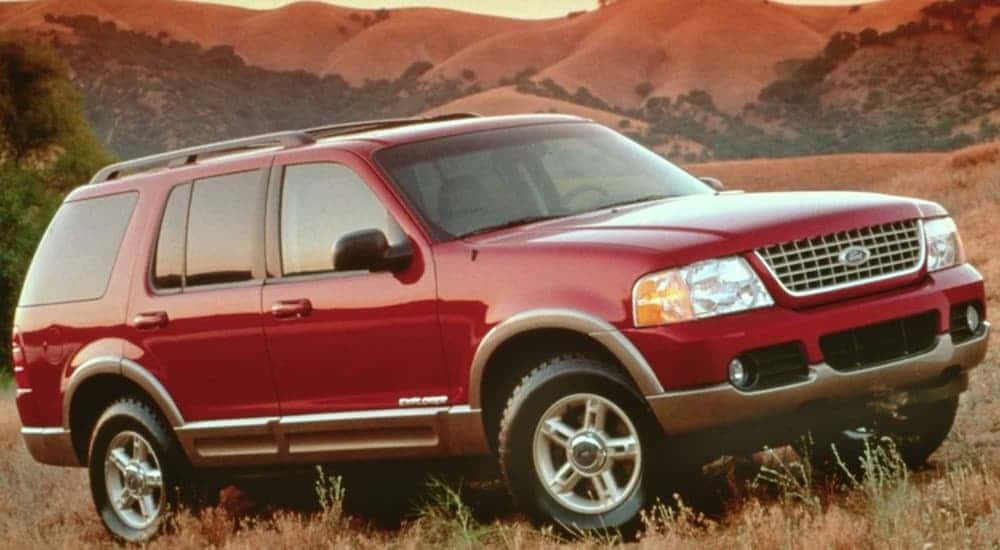
The Ford Explorer was the undisputed champ of the 2000s SUV market. Ford’s flagship SUV had an undeniable impact on the U.S. auto industry and was responsible for the eponymous “Explorer Effect” that saw families adopt the format in droves. The Explorer was everywhere in the 1990s and 2000s, including inside the minds of Ford’s competitors, who initially struggled to produce models that could match its popularity. It was the SUV that inspired many imitations, and even landed a cameo in the 1993 box-office sensation Jurassic Park.
The Explorer has undergone an interesting evolution over the years, one that perfectly reflects larger trends within the segment. The Explorer began as a midsize body-on-frame model in 1991. While this design served the SUV well for the better part of two decades, sales began to slump towards the end of the 2000s as drivers shifted towards new crossover options. Ford sold just 60,000 units in 2010, down from 445,000 in 2000, but was able to adapt to a changing market by introducing a crossover design in 2011.
Now
The Explorer has continued to evolve in the years since. While it has never managed to regain its former dominance, the crossover format appears to be working well, with annual sales regularly falling in the 200,000-unit range. The SUV remains a favorite among families, with the 2025 model earning the “Best Family Car” award from CarBuzz. The publication praised the Explorer’s mid-cycle refresh, upgraded infotainment system, and hands-free BlueCruise technology, which is regularly cited as the industry’s best automated offering. With five trims to choose from, there’s sure to be an Explorer out there to meet the needs of every driver, whether they’re in the market for a value-packed base model like the Activ, the sporty ST, off-road-ready Tremor, or luxurious Platinum trim. Ford did offer an enticing hybrid powertrain between 2020 and 2024, but dropped the electrically assisted setup in favor of two turbocharged engines that offer between 300 and 400 hp, while still achieving up to 29 MPG on the highway as you ride into Amsterdam on I-90.
Toyota RAV4
Sales (2000 to 2009): 1.6 million
Then
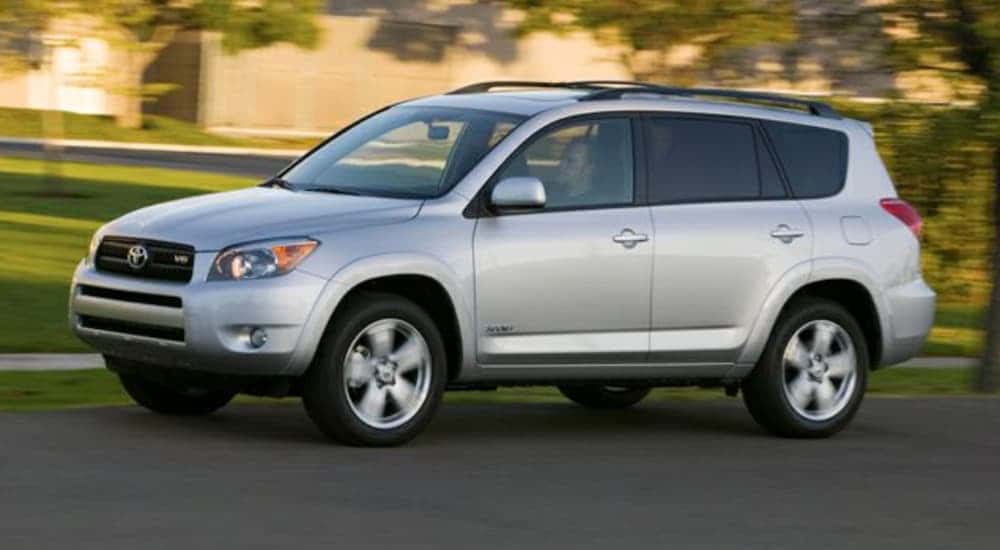
The Toyota RAV4 is a revolutionary figure in the SUV segment. Toyota might not have realized the impact this humble model would have on the market when it first combined the Corolla’s platform with a raised suspension, two-box SUV silhouette, and an AWD system cribbed from the rally-inspired Celica All-Trac, but we’ve been living in a post-RAV4 world ever since. The classic crossover initially experienced modest success, as late-90s drivers were still largely enamored with bigger body-on-frame models. However, the RAV4 proved prescient, with sales picking up as the years rolled on.
Toyota only moved around 60,000 to 80,000 units per year between 1996 and 2005, but things quickly changed with the debut of the third-generation model in 2006. The RAV4 had long occupied the smaller end of the compact segment, but Toyota significantly stretched the SUV, dramatically improving cargo and passenger space and even offering an available third row of seating. The second-generation RAV4 also adopted a new, modern platform and offered one of the most powerful engines in the crossover segment in the form of a 269-hp V6.
Now
The RAV4 remains the benchmark against which many compact crossovers are measured, and it easily dominates the segment, with the 2024 model selling around 475,000 units. Its compact Japanese compatriot, the Honda CR-V, has long played second fiddle to Toyota’s game-changing crossover. While Ford has jettisoned the Explorer’s hybrid engine, Toyota is taking the opposite approach. The brand actually discontinued the RAV4’s traditional gas engine in favor of three hybrid options. A 2.5L I-4 engine and two electric motors power most models, providing Amsterdam drivers with 226 hp. However, AWD trims add a third motor and an extra 10 hp to the equation. The plug-in hybrid (PHEV) version is the clear leader in terms of performance with 320 hp, and offers 42 miles of all-electric range, while the regular hybrid returns up to 39 MPG combined. Toyota is certainly taking a slight risk with the hybrid-only tactic, but given the brand’s past success and ability to quickly identify emerging trends, it’s hard to bet against the RAV4 as it moves into the future.
Chevy Trailblazer
Sales (2000 to 2009): 1.5 million
Then
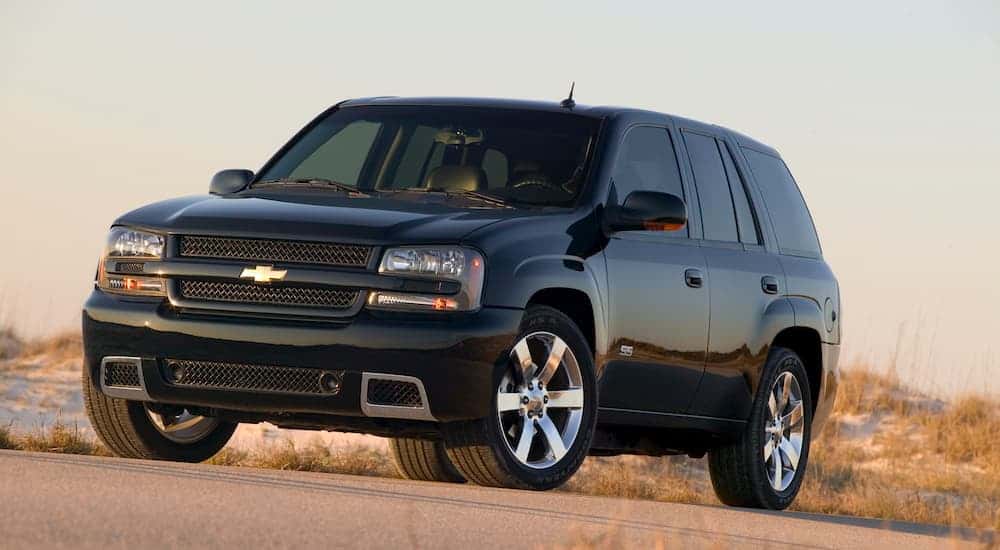
The Chevy Trailblazer boasts a confusing lineage that’s bound to boggle even the most astute automotive historian. The Trailblazer actually began as a premium trim for the body-on-frame S-10 Blazer back in 1999 before being spun off into its own model, replacing its namesake as Chevy’s flagship SUV in 2001. Based on the GMT360 truck platform, the first-generation Trailblazer offered standard four-wheel drive, an independent front suspension, and a five-link rear suspension, which gave the SUV impressive off-road capability. Like the original Trailblazer trim, the new standalone model also increased the luxury factor with a long list of premium features that earned it praise from both drivers and critics alike. A six-disc in-dash CD changer, heated front bucket seats, a touch-screen radio with a GPS navigation system, and a rear DVD entertainment system might sound like pretty standard fare in today’s market, but these features were fairly groundbreaking back in the mid-2000s. The Trailblazer was able to cruise well ahead of the curve, offering drivers a high-end alternative to the standard SUV long before such premium features became mainstream.
The Trailblazer also offered significantly more power than many of its rivals, featuring a new DOHC inline-6 engine that could produce up to 291 hp and allow the SUV to tow up to 6,700 lbs. That left other midsize models, such as the Jeep Grand Cherokee (210 hp) and Toyota 4Runner (183 hp), firmly in the rearview mirror, and played a significant part in the Trailblazer’s sales record. The brand moved 250,000 units by the Trailblazer’s second year on the market, and peaked at 283,000 in 2004. The next-generation model would have probably continued the trend if not for a fateful decision to cancel the entire platform in favor of the new crossover-based Traverse.
Now
The Trailblazer returned to the scene in 2021 in a new, smaller guise built around a crossover design. The subcompact Trailblazer excels in its affordability, offering drivers a well-rounded option that allows them to join the crossover bandwagon without breaking the bank. A 2024 refresh saw the SUV gain several aesthetic enhancements, as well as new lights, a new front bumper, and numerous updated interior technologies, while still retaining sufficient off-road capability to explore the Adirondacks confidently. The Trailblazer’s 11.0-inch touchscreen infotainment display trends well above average, complemented by an 8.0-inch digital gauge cluster, a standard Wi-Fi hotspot, and wireless Apple CarPlay and Android Auto smartphone connectivity. While the upper trims allow Amsterdam motorists to enjoy premium features like a panoramic sunroof, a Bose premium audio system, and an auto-dimming rearview mirror, which speak to the crossover’s roots as a luxury trim for the S-10 Blazer, the current Trailblazer would hardly be recognizable to a time-traveling driver.
Find All Your SUV Favorites at DePaula Ford
No matter what sort of SUV you’re looking for, you’ll find it here. From classic models like the Ford Explorer, Toyota RAV4, and Chevy Trailblazer to newer models like the Nissan Rogue and Mazda CX-30, exciting new hybrid and EV options including the Mustang Mach-E, F-150 Lightning, and more, DePaula Ford is the Capital Region’s SUV headquarters. Stop by today and experience a taste of SUV history in one of our quality pre-owned vehicles or drive into the future behind the wheel of the latest model.

0 comment(s) so far on The Lasting Legacy of the SUVs That Defined the 2000s