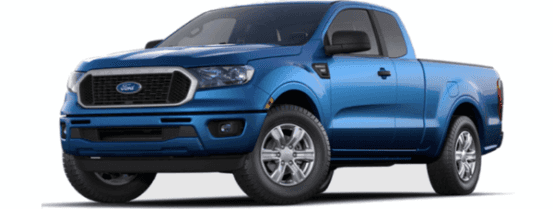
Starting at
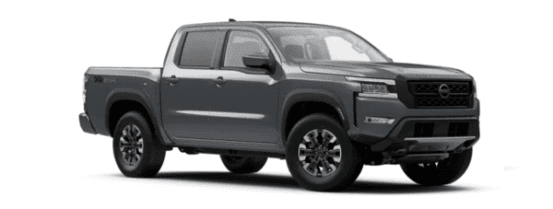
Starting at
| 310 | Torque (lb-ft) | 281 |
| 7,500 | Max Towing (lbs) | 6,720 |
| 1,905 | Max Payload (lbs) | 1,710 |
If there’s one group of people who can appreciate the sheer power of automobiles, it’s truck drivers. Fortunately for this dedicated group of drivers, there’s no shortage of options in the market. Maybe you’ve already looked around, and ultimately, you’ve narrowed your choices down between two manufacturers. More specifically, you’re interested to find out which truck comes out victorious when the 2022 Ford Ranger vs 2022 Nissan Frontier is brought into the discussion.
The chances are with your truck, you want respectable performance wrapped in a feature-rich package, and you’re likely not interested in a vehicle as large as a full-size pickup. There are a few key areas that shoppers expect their trucks to excel in, and both the Ranger and Frontier are undeniably appealing on the surface. However, the deeper you look into these trucks, it becomes apparent that one simply isn’t as worthy as the other.
Our first difference is in pricing, and as similar as the Ranger and Frontier can be, the Ranger is a far cheaper vehicle. The base Ranger model, the XL, starts at an MSRP of $25,500.[a] Alternatively, the Frontier starts at an MSRP of $28,340 for its base trim, the S. It’s worth stressing, this isn’t a small digression – the Frontier in its base form will run you nearly $3,000 more, which by that point, you could almost invest in the Ranger XLT, whereas the next-tier Frontier SV costs thousands more. And, having three trims to select from with the Ranger means that Ford could fit more features in fewer trims, and investing in the top-tier Ranger model will cost several thousands less than the best Frontier money can buy.
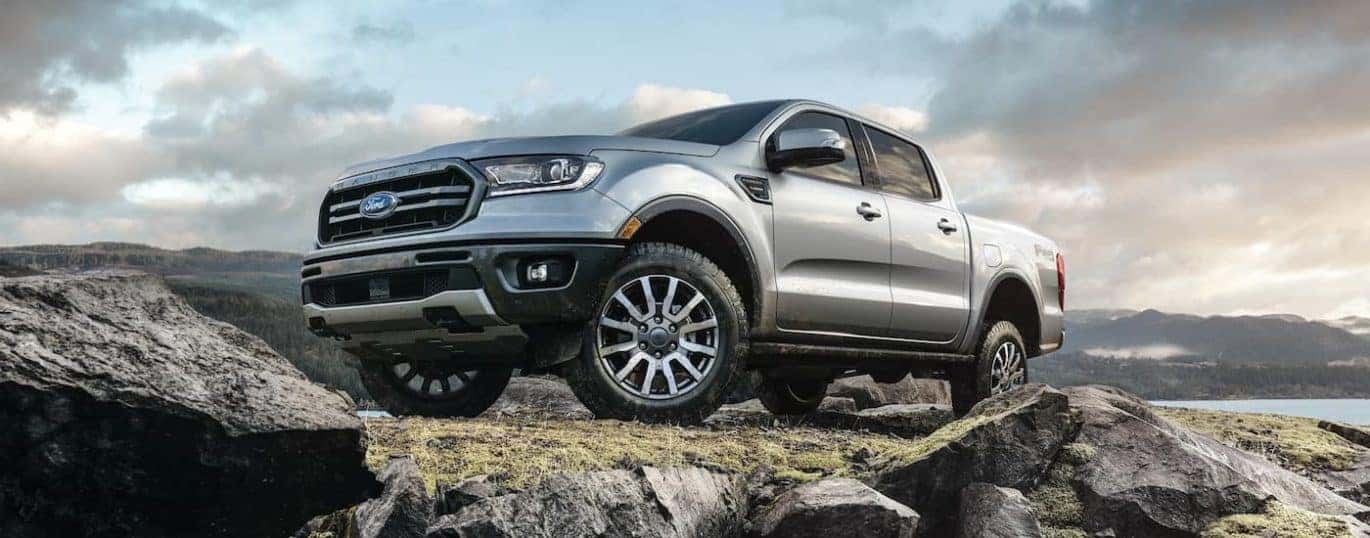
Among all of the differences between the Ranger and Frontier, the one that sticks out the most is powertrain configurations. With the Ranger, you’ll get a turbocharged 2.3L I-4 engine paired with a 10-speed automatic transmission. Should you choose the Frontier, you’ll get a 3.8L V6 engine paired with a 9-speed automatic transmission. This immediately tells us the Ranger is more fuel-efficient, and the claims are certainly correct. Ford’s pickup truck gets EPA-estimated ratings of 21 MPG in the city and 26 MPG on the highway against the Frontier’s 18 MPG in the city and 24 MPG on the highway. Models with AWD tell a similar story, with Ford’s truck pulling in ratings of 20 MPG city and 24 MPG highway against Ford’s 17 MPG city and 22 MPG highway.
The one advantage the Nissan Frontier has over the Ford Ranger is horsepower. With the Frontier’s V6, the truck creates 310 hp over the Ranger’s 270 hp. While this difference may seem stark, it doesn’t benefit the Frontier in the areas where it matters the most. For example, with the 3.8L V6 inside of the Frontier, there’s a towing capacity of 6,720 lbs along with a payload capacity of 1,710 lbs. Seems like a good deal, but once you look at the Ranger’s towing and payload capacities of 7,500 and 1,905 lbs, it’s a whole new story.
For Ford’s truck, this 11.6% increase in towing capacity is partly a result of the Ranger’s 310 lb-ft of torque against the Frontier’s 281 lb-ft torque output, which alone is a 10% difference. If towing is important to you, or if you suspect you’ll eventually be towing moderately-sized cargo, you’ll want the truck with more grunt for the job. Keep in mind how much more the Frontier costs than the Ranger, and it’s easy to declare the Ranger the better vehicle in the performance category.
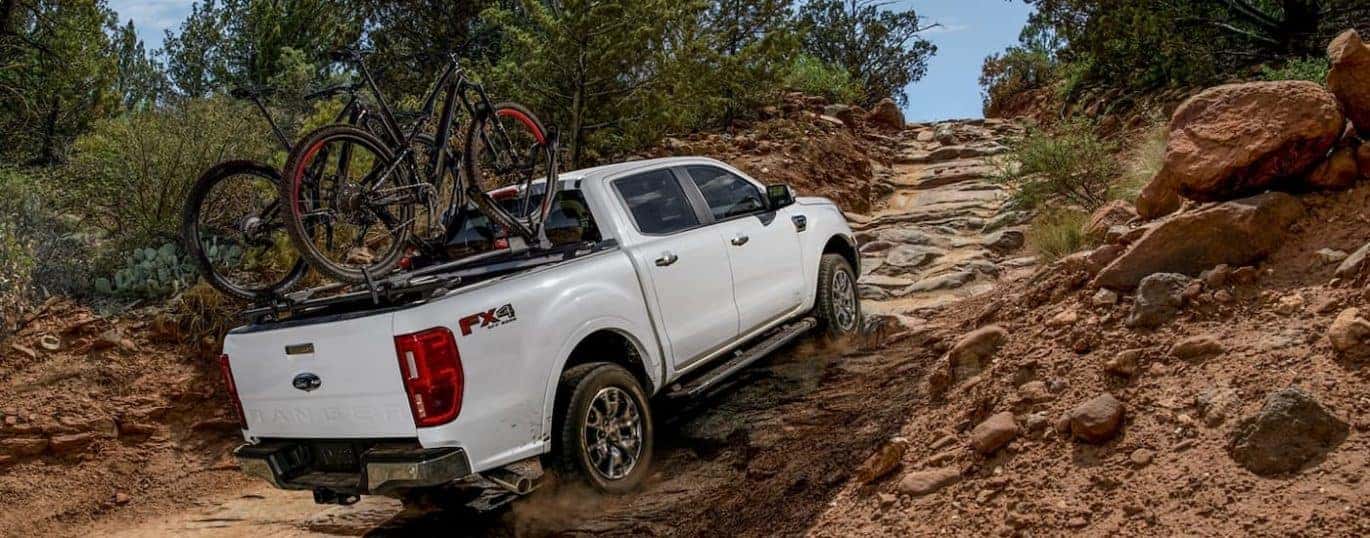
One of the most appealing aspects of the Ranger and Frontier is the off-roading capabilities you’ll find on these pickup trucks. It all starts with ground clearance, which is what will protect the undercarriage, and the higher the ground clearance, the easier certain off-roading tasks such as rock crawling will be. With this in mind, the Frontier caps out at 9.4 inches of ground clearance. While ideal, the Ranger does offer a higher 9.7 inches when equipped with the Off-Road Package.
Of course, you’re going to want a 4WD system for off-roading, and both the Ranger and Frontier support 4WD. More specifically, both trucks offer 4WD High and Low. This is important because many 4x4 vehicles only offer 4WD High, but for more intense off-roading scenarios, such as rock crawling and traversal through mud, you’ll want to use 4WD Low. 4WD High locks differentials to ensure every wheel is traveling in unison to keep traction. 4WD Low instead caps your top speed and utilizes a lower gear ratio within the transfer case, with the result being increased torque output in moments when you’d need it the most.
To build a serious off-roading vehicle, it also needs a suspension capable of handling the unpredictability of the trails. Part of this includes shock absorbers, which you’ll find on both trucks. Shock absorbers work as the name implies, they will absorb the vibrations from your vehicle hitting the ground, which ultimately helps with heat dissipation when your vehicle is under stress, such as when off-roading, for example. Additionally, both trucks offer skid plates to place under your truck to prevent debris from the trail from damaging the vehicle’s undercarriage. Ultimately, the lower price of the Ranger combined with better ground clearance makes it the better off-roading vehicle.
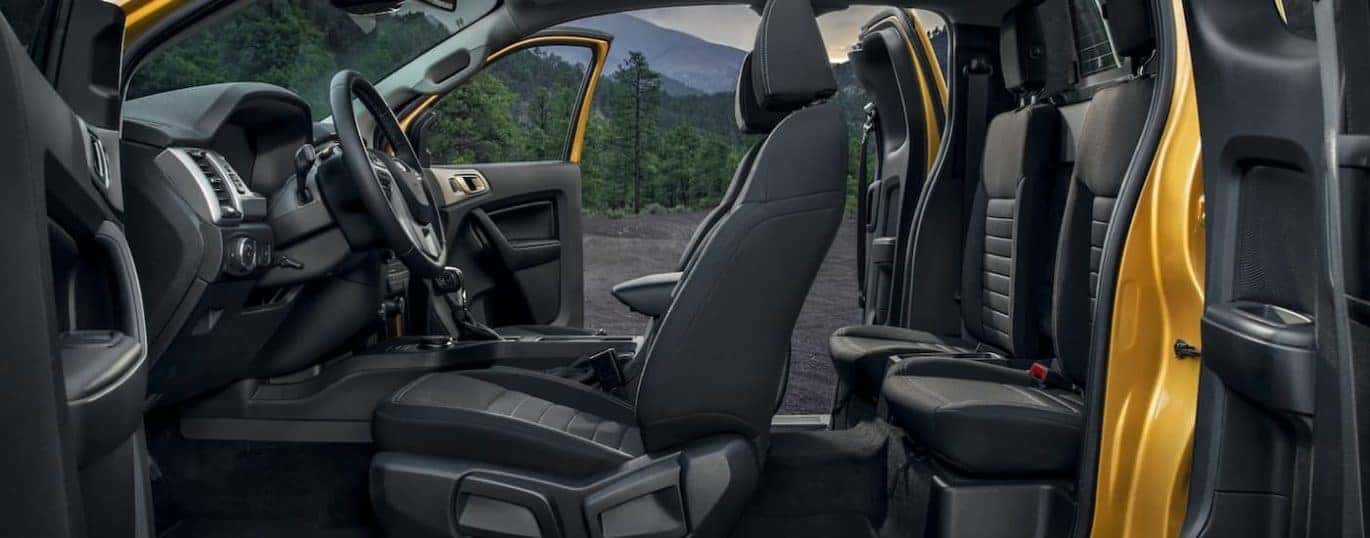
Trucks aren’t all work and no play – there are some features worth mentioning. Whether it’s technology, comfort, or safety, both the Ranger and Frontier have their fair share of features designed to make your life either easier or more comfortable and entertaining, at the least. A perfect example of comfort is predictably in seating. Keeping the driver comfortable at all times is a necessity for a pickup truck to reach any level of success, and the Ranger outdoes the Frontier in both standard and upgraded configurations.
Starting with the base models, your Frontier will come with a 6-way manual driver’s seat, while the Ranger includes an 8-way manual seat. Upgrading to a pricier Ranger replaces this with an 8-way power-adjustable seat, while the Frontier only gets a 6-way power seat. However, the Frontier’s upgraded driver seat has 2-way lumbar support, which is, unfortunately, missing on the Ranger. What’s worse, however, is that the front passenger seat in the Frontier will be stuck with a simple 4-way manual seat, yet your Ranger can be configured to give this passenger a 6-way power-adjustable seat. Each vehicle can also be fitted with either cloth, premium cloth, or leather seating to lend extra flair to your interior.
Infotainment centers can also be found in both trucks. When fully kitted out, the Frontier gives you a 9-inch touchscreen against the Ranger’s 8-inch screen. Will you notice this difference during real-world usage, however? No, you will not. The 8-inch infotainment center found in the Ranger can do everything that the Frontier can do. Apple CarPlay and Android Auto both come standard via a USB connection, but if you prefer simply choosing your favorite music through your smartphone and having it stream wirelessly, you can still do so with Bluetooth. SYNC 3 and NissanConnect both have their uses, and both infotainment centers allow for an optional 4G LTE Wi-Fi hotspot for drivers who are interested in fitting a wireless internet connection into their vehicle.
Of course, safety features are a large part of vehicles and their success today. Most manufacturers have developed a variety of assistive software that intelligently operates to prevent accidents that not only were common in the past but are still common today. For example, front-end collisions are a common type of accident, and both the Ranger and Frontier tackle this in similar ways. Nissan’s truck uses Automatic Emergency Braking with Pedestrian Detection, and the Ranger uses its Pre-Collision Assist with Automatic Emergency Braking. These features alert you before a collision, and by automatically applying the brakes, your truck can work to prevent accidents entirely.
Both trucks include a variety of other safety features that are mostly a match too. The Lane Departure Warning for the Frontier can be matched with the Ranger’s Lane Keeping System. Both the Ranger and Frontier include blind-spot coverage, which is known as the Blind Spot Warning on Nissan’s truck, and BLIS on Ford’s. Lastly, while both vehicles have Rear Cross-Traffic Alert to ensure you don’t hit another vehicle while reversing, only Ford’s truck extends this capability to behind the trailer. Although safety is a close contest between the Ranger and Frontier, the Ranger is the better vehicle with undeniably more value when given the price difference.

Like a trip to the dentist, many drivers don’t look forward to their next dealership visit. Perhaps it’s the size of the purchase, or maybe it’s because you’ve been to one too many dealerships that left a proverbial bad taste in your mouth. At DePaula Ford, our goal is to change the way you think about vehicle dealerships forever. Our staff is trained to supply our customers with a friendly and informative experience where you can ask questions, look at our inventory, and test drive any vehicle you please.
Our prices are competitive against the competition too, and you can trust our on-site financing department to find you the perfect loan or lease if you don’t want to purchase the vehicle upfront. Or, come on down to our on-site service center, and we’ll get your vehicle fixed in no time with the help of our certified technicians. There’s no reason to wait; come on down to our dealership at 799 Central Ave in Albany, NY, to get your new Ford vehicle today.
*Images, fuel economy, and other stats, may reflect higher trim levels, options, or features that may result in a higher cost from the starting MSRP.
MSRP excludes tax, license, registration, additional options, and possible destination charges. Dealers set own prices.