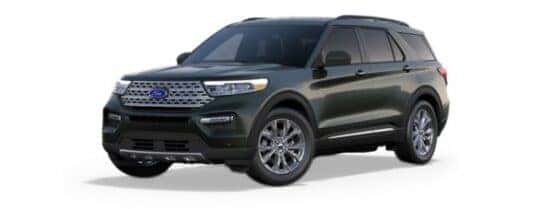
Starting at
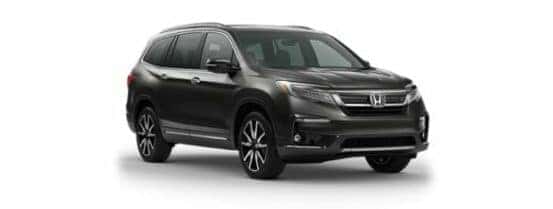
Starting at
| 300 | Horsepower (hp) | 285 |
| 310 | Torque (lb-ft) | 262 |
| 5,600 | Max. Towing Capacity (lbs) | 5,000 |
The automotive industry is saturated with SUVs of every size, with automakers answering the growing demand for more options and different-sized models that offer distinct handling and capability. Honda and Ford are certainly among these automakers, thanks to best-selling models like the Pilot and Explorer. These three-row SUVs might share the same class, but they are incredibly different. Comparing the 2024 Ford Explorer vs 2024 Honda Pilot reveals those differences that can significantly impact your investment and experience in the driver's seat.
Many drivers are drawn to the Pilot because of Honda's stellar reputation for reliability. Honda models are well-known for logging hundreds of thousands of miles, but models with the Blue Oval are just as capable. More importantly, Honda didn't help shape the global automotive landscape, at least not initially. That title belongs to the Ford Motor Company, with the Explorer continuing an outstanding legacy of putting the world on wheels.
The Explorer embodies the values that have defined the Ford Motor Company since the 1900s. Henry Ford set out to build reliable and affordable vehicles, transforming how we travel from point A to point B. The 2024 Explorer offers as much, with its starting price of $36,860, making it more affordable than the 2024 Pilot at $37,090.[a] Likewise, the 2024 Explorer's value-oriented packaging means you get more for your hard-earned money, a signature of every model in the Ford lineup and one that will forever differentiate the Explorer from rivals like the Pilot.
But what other differences will you find between the 2024 Ford Explorer and the 2024 Honda Pilot? Why are we confident that your search for the perfect three-row SUV won't end with the Pilot but in the driver's seat of the best-selling Explorer? It's time to find out.
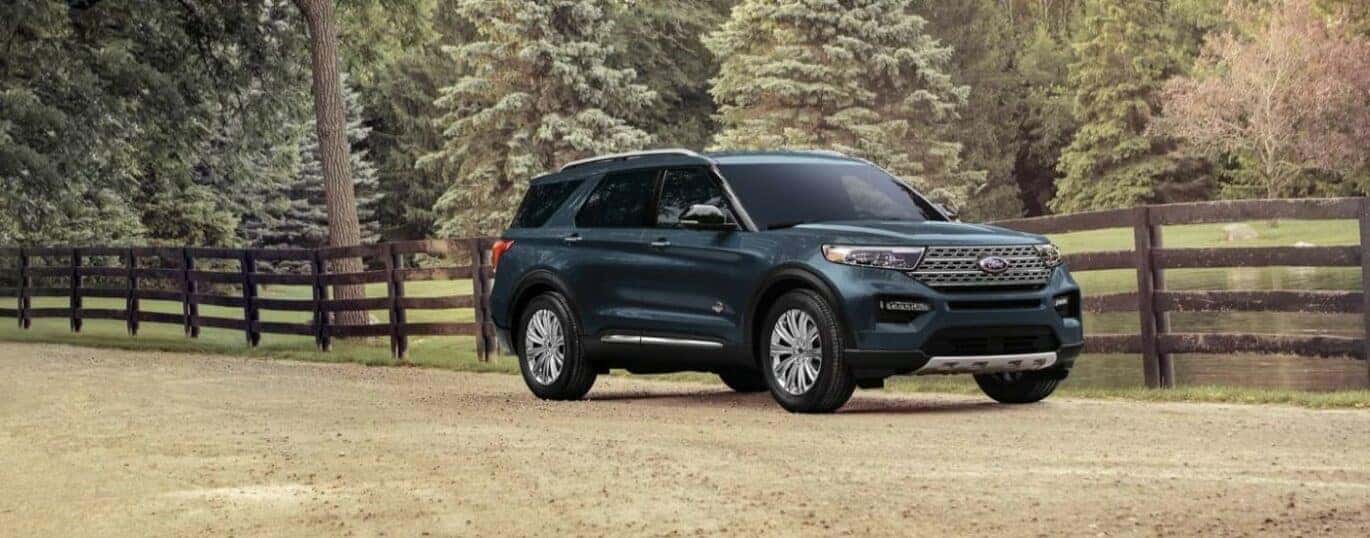
Every automaker takes a unique approach to offering tangible value to drivers, as we see when comparing the 2024 Explorer with the 2024 Pilot. This tangible value typically looks like interior finishes, like the quality of the materials used, the size of the digital displays, and the technologies that add to your experience in the driver's seat. However, the most significant defining point is how automakers set the benchmark for this value. Or, in other words, how they package and price their base models to give you more for your money.
The 2024 Pilot lineup is extensive, stretching from the entry-level LX and Sport to the EX-L, TrailSport, Touring, and Elite. However, the starting price of $37,090 leaves much to be desired, especially when you see how much the Explorer offers for far less of your hard-earned money. For example, the 2024 Pilot LX sets the baseline, rolling off the factory floor with 18-inch wheels, LED headlights, and a skeletal lineup of technologies. Honda outfits the SUV with a 7-inch display with Apple CarPlay and Android Auto, a seven-speaker audio system, a multi-angle rearview camera, Adaptive Cruise Control with Low-Speed Follow, a Collision Mitigation Braking System, and a Road Departure Mitigation Braking System.
At first glance, the Pilot's packaging in 2024 seems appealing, but Ford manages to give drivers more without skyrocketing the Explorer's starting price in 2024. The 2024 Explorer lineup starts at $36,860 for the base model, modestly increasing in price with the XLT, performance-oriented ST-Line and ST, rugged Timberline, and luxurious Limited, King Ranch, and Platinum. The base model sets an incredible benchmark with its long list of features. Ford gives drivers a larger, 8-inch display with Apple CarPlay and Android Auto integration. The display, home to the SYNC infotainment system, also features FordPass Connect and gives you access to a 4G LTE WiFi hotspot.
The Explorer's premium Bang & Olufsen 12-speaker sound system easily overshadows the Pilot's meager 7-speaker design, a theme that continues with the outstanding Ford Co-Pilot360 suite of driver-assist technologies. This suite builds on the Explorer's expansive rear-view camera and adds a Lane-Keeping System with Lane-Keeping Assist, Lane-Keeping Alert, and Driver Alert. Drivers also benefit from automatic high-beams and a lineup of advanced tools that Honda forces you to spend more for in the Pilot's 2024 lineup.
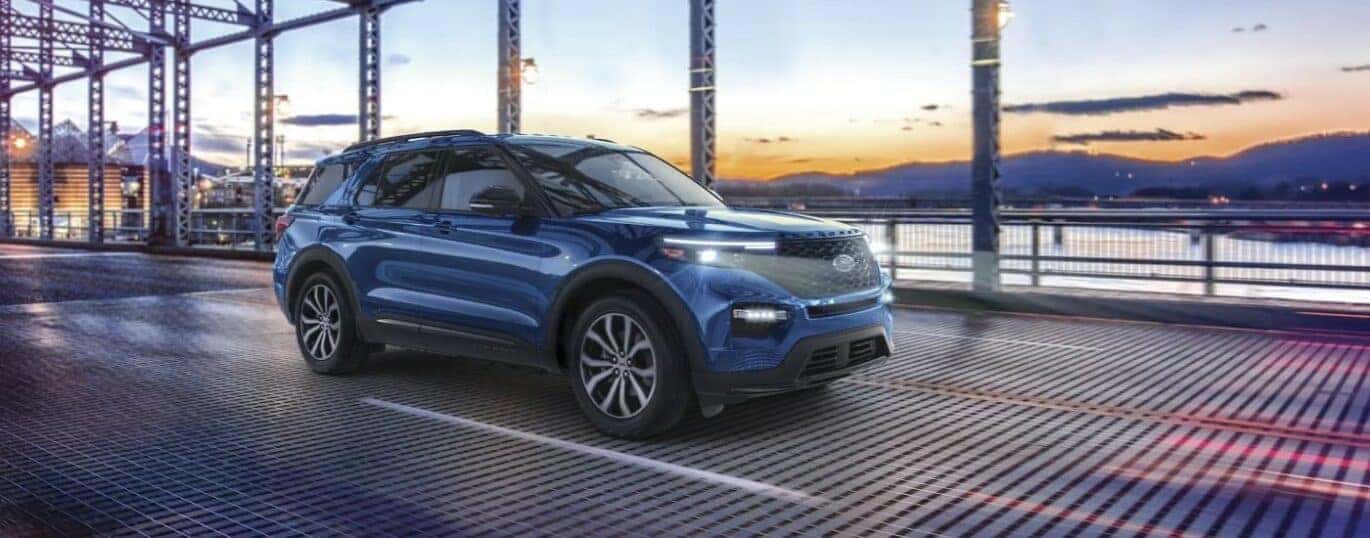
Your experience in the driver's seat should be rewarding, safe, and engaging, which is another area where Honda and Ford differ. Honda takes a simple approach to the 2024 Pilot's powertrain lineup, offering one engine and eliminating the opportunity for drivers to choose the powertrain that fits their driving, performance, and capability needs. Instead, the 2024 Pilot is powered by a 3.5L V6 engine mated to a 10-speed automatic transmission, a match that delivers a steady 285 hp and 262 lb-ft of torque for a maximum towing capacity of 5,000 lbs.
Honda eliminates your choice of powertrains, but the automaker gives you more control over the Pilot's performance by outfitting it with a five-mode drive system. You can harness the V6's output using Normal, ECON, Snow, Tow, and Sport Modes, which tailor the feel of the steering wheel, the suspension, and overall responsiveness to accommodate the situation and your driving preferences. The experience expands with trims like the TrailSport, which is more rugged with its off-road-tuned suspension and all-terrain tires. Instead of five modes, the TrailSport has seven, adding Trail and Sand to accommodate the model's penchant for light off-roading.
Even with the selectable drive mode system and reliable V6 engine, the 2024 Pilot fails to impress when compared to the 2024 Explorer. Ford does a far better job of making its full-size SUV satisfy every need for performance, defying expectations with every mile it travels. Unsurprisingly, the Explorer's base powerplant, a 2.3L EcoBoost turbocharged inline-four, delivers more power than the Pilot's V6 engine as it produces 300 hp and 310 lb-ft of torque for more dynamic performance and better off-the-line acceleration. This boost in power also pushes the Explorer's towing capacity to 5,300 lbs, another advantage over the Pilot.
The real showstopper that puts the 2024 Explorer legions ahead of its Honda rival is its available 3.0L EcoBoost turbocharged V6 engine. The turbocharged powerplant transforms the three-row SUV into a road warrior, producing 400 hp and 415 lb-ft of torque. Using the Terrain Management System, Ford lets you harness this power and the SUV's maximum towing capacity of 5,600 lbs. The system offers up to seven selectable drive modes, ranging from Normal, Slippery, Sport, and Eco Mode to Trail, Deep Snow/Sand, and Tow/Haul. While the modes are similar to the 2024 Pilot, you have far more power at your fingertips with the 2024 Explorer.
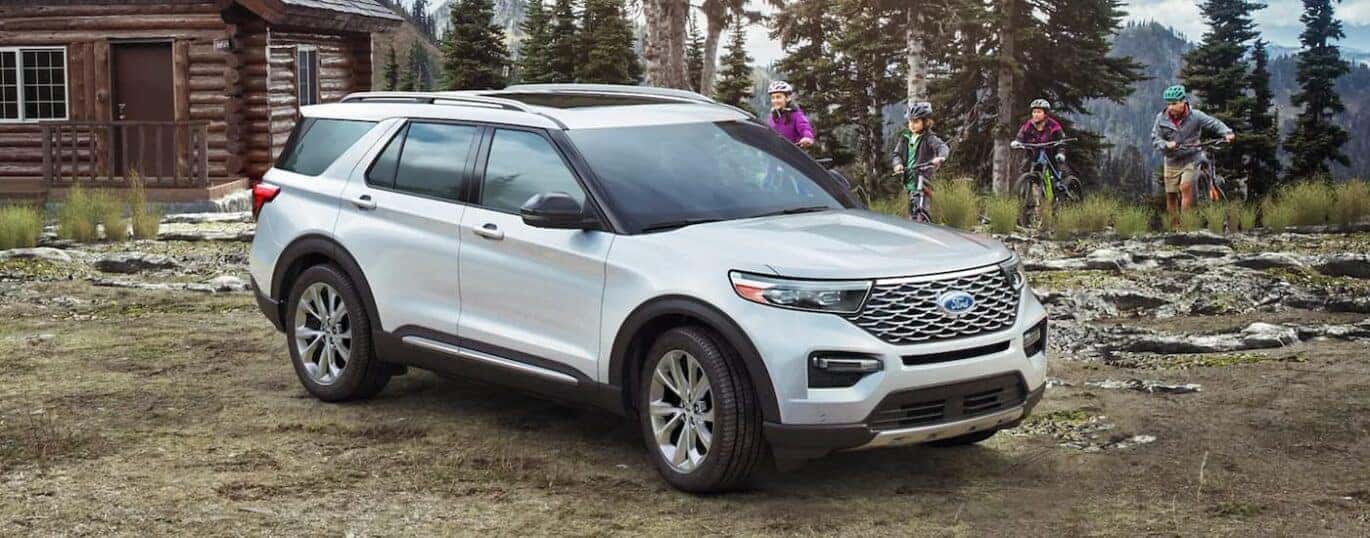
Technology often levels the playing field when shopping for a model because automakers like Ford and Honda offer advanced features designed to improve your experience, heighten your safety, and optimize your situational awareness as you navigate the road. Yet, even with many comparable technologies, comparing the 2024 Explorer to the 2024 Pilot showcases Ford's success in giving drivers more value in the realm of technology. It's impossible to ignore that the 2024 Explorer is better equipped, especially with its more affordable price tag.
The 2024 Pilot rolls off Honda's factory floor with a standard 7-inch touchscreen display, an inch smaller than the 2024 Explorer's 8-inch display. Upgrading to a larger screen in the Pilot means enjoying a 9-inch display, but Ford does even better by outfitting the 2024 Explorer with an expansive 10.1-inch color touchscreen display. Likewise, Ford's SYNC infotainment system is far more intuitive, a defining feature that determines how easily you can access your smartphone via Apple CarPlay or Android Auto, navigate the quickest route, or explore other in-vehicle apps. By comparison, the Pilot's infotainment system feels dated and far less streamlined than Ford's SYNC system, which is frequently updated via over-the-air software updates to keep the Explorer operating at its best.
Apart from the size of the displays, the 2024 Explorer integrates more technology throughout the cabin. Some of this technology, like the multi-color ambient lighting and twin-panel moonroof on top-tier trims, is readily apparent, while others work behind the scenes to improve your safety and experience in the driver's seat. For example, the top-tier Pilot boasts a panoramic moonroof, but its driver-assist technologies are far less impressive. Honda outfits the SUV with the standard tools–a Collision Mitigation Braking System, Road Departure Mitigation System, Blind Spot Information with Cross Traffic Monitor, and Adaptive Cruise Control with Low-Speed Follow–but only adds Parking Sensors to the top-tier trim.
Fortunately, Ford takes a different approach by building on the standard Ford CoPilot360 suite. Depending on the trim, the 2024 Explorer offers many technologies to improve your experience behind the wheel. These cutting-edge technologies include Rear Parking Sensors but, even more impressive, Pre-Collision Braking and Active Park Assist 2.0, which makes every parking situation a breeze.

Maybe your search for the perfect three-row SUV started with the 2024 Honda Pilot, which is understandable because of Honda's reputation. However, we guarantee your search took a new turn when you realized how much more you get with an SUV like the 2024 Explorer. Ford knocks it out of the park, celebrating its customers by building value-packed SUVs with a long list of standard and available features, technologies, and amenities.
Models like the 2024 Explorer fuel our excitement at DePaula Ford because they showcase Ford's incredible legacy in the industry. We're honored to continue that legacy and welcome you into the Ford and DePaula families with open arms, promising the partnership of a lifetime. That partnership includes an incredible car-buying and owning experience you won't find anywhere else.
We'll walk you through our incredible selection, tailoring our approach to your needs by listening attentively to what you want and expect from your next SUV. From there, we'll ride along for test drives, answer your questions, and help you navigate the finance process without hassle or stress. With integrity, respect, and transparency, an extraordinary experience is always guaranteed, from sale to service and every mile beyond and between.
*Images, fuel economy, and other stats, may reflect higher trim levels, options, or features that may result in a higher cost from the starting MSRP.
MSRP excludes tax, license, registration, additional options, and possible destination charges. Dealers set own prices.