



Raptor R is for Racing

The new 2021 Ford Raptor is not just built to compete but to win. The latest version of this legendary truck is filled with cutting-edge performance features that make it the king of the trail. However, not only did we get an upgrade to our favorite performance truck, but Ford also announced an upcoming all-new Raptor R that will be even more capable than the already incredible Raptor. The details on the Raptor R remain scarce, but we can’t wait to welcome this truck into the showroom of your favorite Ford Dealer near Troy.
The new 2021 Ford Raptor and upcoming Raptor R are the result of Ford’s dedications to factory-built off-road speed machines and decades of off-road racing experience. This upcoming truck is the ultimate showroom-fresh off-road speed machine. Capable of heading off the beaten path without modifications, the Raptor R will be able to dominate multiple racing disciplines. Unlike almost any other kind of off-roading, desert or Baja racing requires speed and power in equal amounts to ground clearance and suspension travel. Frequently these vehicles travel well over any on-road speed limit without any road at all.
F-150 Raptor History
The First Raptor
The original Ford SVT Raptor was a specialty enthusiast vehicle based on the twelfth-generation F-150. This vehicle was a bombshell when first unveiled, as nothing else like it had really been sold before. It was equipped with upgraded shocks and a significant lift kit, allowing for 11.2 inches of suspension travel in the front and over a full foot of travel in the rear.
The suspension has an outsized effect on high-speed desert racing vehicles, as it must keep up with viciously undulating terrain while moving at very high speeds. With any normal racing vehicle, the tires are the most important aspect of performance. But with a desert truck, the suspension is the most important factor. If the suspension can’t keep up with you, you will have a jarring ride that can damage the vehicle and injure the passengers.
The first generation Ford Raptor was an enormous success for Ford, mostly in that it tapped into an entirely new kind of performance that brought with it a new audience for the company at large.
Second Generation
Since it was such a success, when the F-150’s thirteenth generation came around, there was definitely going to be a second-generation Raptor. This Raptor took advantage of the F-150’s new aluminum construction to increase power to weight ratio while continuing to use steel to dramatically increase frame strength when compared to the original vehicle.
This second-generation featured many of the same upgrades found on the first Raptor, including a significantly wider stance to improve handling, fit the required large tires and suspension, and provide a much more stable platform when the vehicle landed jumps. But while much of the basic philosophy was the same, improved technology introduced major changes, including a new engine and increased suspension performance. The new engine was the twin-turbo EcoBoost 3.5-liter V6, belting out 450 horsepower and 510 pound-feet of torque. More powerful and torquey than its predecessor, this EcoBoost V6 outperformed the massive naturally aspirated V8 in the previous generation.
Other significant improvements with the second generation Raptor include large diameter FOX off-road racing shocks, which help facilitate 13 inches of front suspension travel and 13.9 inches of rear suspension travel. The second-generation Raptor also featured a new 10-speed automatic transmission, bolstering power delivery and efficiency by providing the exact gear ratio needed for any situation. Not to mention the quick shifts to get to that ratio so quickly that power delivery is practically uninterrupted.
Third Generation
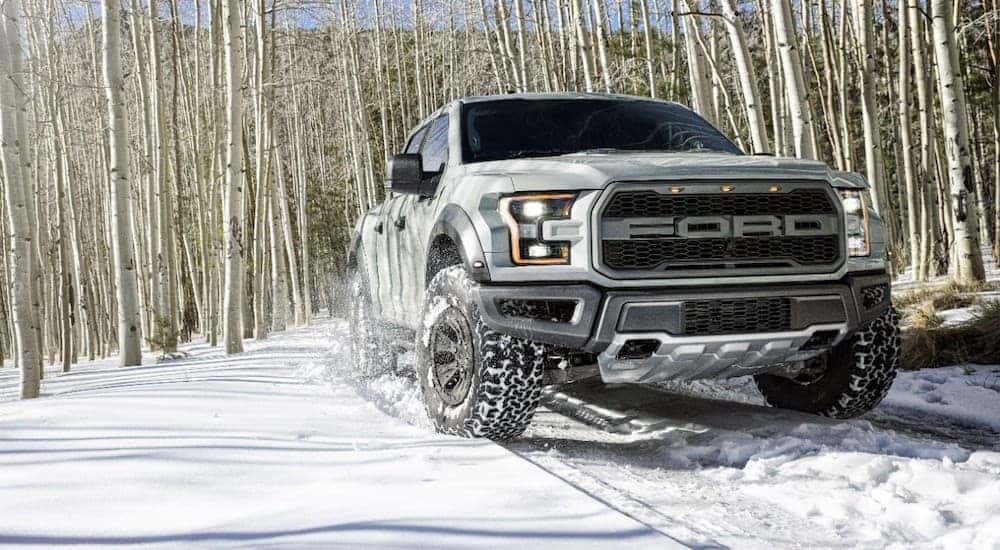
The third-generation 2021 Raptor continues to evolve Ford’s ultimate performance truck. Although the power plant remains the satisfactory 3.5-liter EcoBoost V6, the rest of the truck sports numerous improvements. The single largest performance upgrade is an even larger set of 3.1-inch FOX shocks and improved suspension geometry. These changes mean that the 2021 Raptor now boasts 14 inches of front travel and 15 inches of rear travel.
Other improvements make the Raptor a more liveable truck, with updated technology and improved towing and payload figures. The massive 12-inch central touch screen with the cutting edge SYNC 4 infotainment system means that you can now access all of your favorite services in one place. Further, the Pro Power Onboard feature turns your truck into a mobile 2.0-kilowatt generator, perfect for operating power tools or making your camp more comfortable.
Raptor R
The new Raptor R, which is due to hit the market sometime in 2022, is likely to shake up the game considerably. By all accounts, this hard-core Raptor variant will be powered by a 700-plus horsepower supercharged V8 engine taken from the legendary Shelby GT500 Mustang. This will ensure the Raptor R has more than enough power to outrace any other pickup truck on pavement or off – in fact, there are some rumors that it might be so powerful that it won’t even be road legal!
The Raptor R’s only competition will come from the recently-released Ram TRX, but the enthusiastically named rival shares more with its dinosaur namesake than Ram would like to let on. While the TRX is certainly powerful, it comes up short in the suspension department, even when compared to the standard 2021 Ford Raptor. With an inch less suspension travel front and rear, as well as smaller tires and less ground clearance, the TRX is more of a street truck than a true Baja competitor. Just like in prehistoric nature, the Raptor is far more agile than the T-Rex.
One may think the big and powerful Ram TRX would have a better chance out in the open desert, but raw horsepower alone does not a trophy truck make. The Raptor takes a more holistic approach to Baja speed, largely influenced by actually racing in the Baja 1000 over the years. The TRX is powered by the engine out of the popular Hellcat muscle cars, so it does have power and torque, but remember that the most important aspect of desert performance is the suspension. The Raptor’s suspension system still offers more travel than that of the Ram and can compress and depress fast enough to keep the tires in contact with the ground even when the boost of forced induction is applied.
When the Raptor R hits the scene, things are going to be looking even worse for the TRX. Not only will the Raptor R have superior suspension (quite possibly even better than what the standard 2021 Raptor brings to the table), but the Raptor R will also have more raw horsepower than Ram’s dinosaur. While Ram has taken its best shot at building a full-size performance truck, Ford remains the undisputed master of the segment that it created.
Get Ready for the Raptor
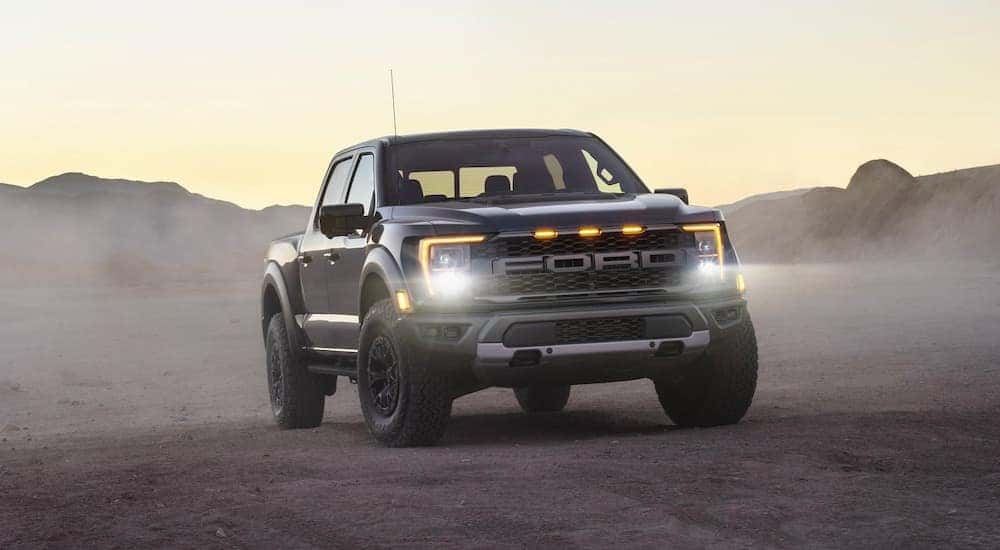
Due to be unveiled in 2022, Ford’s Raptor R promises to be the ultimate desert racing truck from the factory. Equipped with massive amounts of power, jaw-dropping suspension travel and rebound speed, and the looks and stance to go with both, there appears to be no real challenger to its domination of desert performance. However, you don’t have to wait until 2022 to get your hands on an off-road machine. The standard 2021 Ford Raptor is already on its way to Ford dealerships near you, bringing unprecedented performance at an attainable price.
Even the Ram TRX, a truck specially built to defeat it, doesn’t have much of a chance. Just like the dinosaur it is named after, the TRX is bigger and heavier than the Raptor, but that really just means the Ram is slower. For those who want to have the actual off-road racing capability of a relentless and agile predator, instead of a lumbering creature whose arms are too short to reach its food, the choice is easy.

0 comment(s) so far on Raptor R is for Racing