



2026 Ford Explorer vs 2026 Hyundai Santa Fe: Performance and Versatility Compared
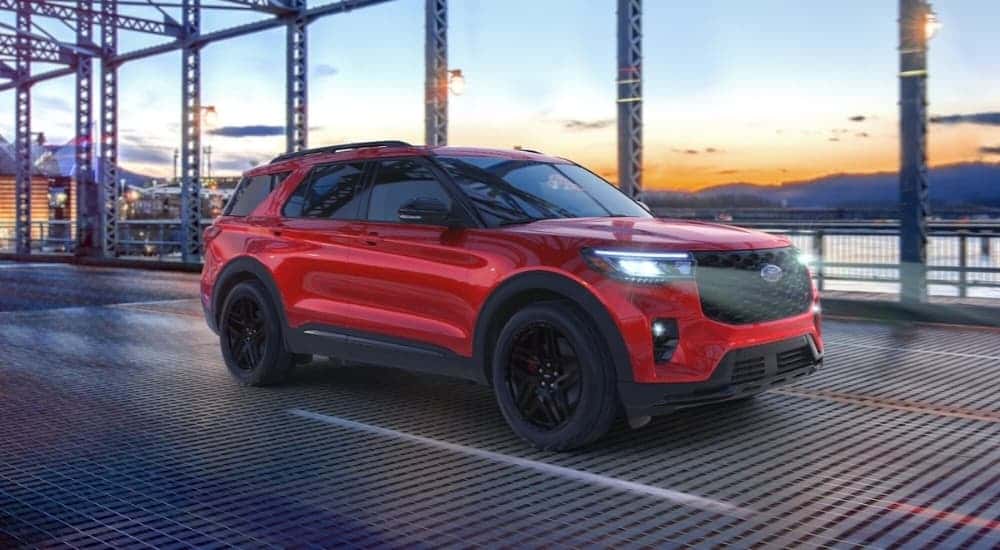
When we look at the 2026 Ford Explorer vs 2026 Hyundai Santa Fe, the two models differ in a number of significant ways. While the Ford Explorer is engineered for capability and dependable strength, the Hyundai Santa Fe targets comfort and style.
Knowing which model is best for your personal preferences has to start somewhere, which is why it can be helpful to analyze the things that both models aim to achieve. Once we’ve developed a stronger understanding of the makeup of each model, we can talk about the more nuanced differences between the two SUVs, but we have to start with the fundamentals.
Let’s dive into the numbers that define each model and calculate which model is superior on a more objective level by determining the cargo versatility, the passenger space, and the engine strength of each SUV. These numbers help paint a strong picture of which model can support your long-term ownership goals.
Engine Power & Towing Strength
For many drivers looking for a dependable SUV, the available torque and towing capacity are often the deciding factors for their SUV of choice. Whether it’s for transporting watercraft, small campers, or utility trailers, you need the towing strength to carry everything for your weekend plans, with convenient tools to reduce the hassle.
Fortunately, both the Hyundai Santa Fe and the Ford Explorer include available towing packages to enable you to take everything you need, plus more. Each model is enhanced with turbocharged powertrains that deliver enough muscle for everyday driving and light-duty towing, but your ultimate choice depends on several important differences.
Hyundai Santa Fe: Reasonable Towing Power
The 2026 Hyundai Santa Fe’s 2.5L turbocharged four-cylinder powertrain delivers 277 hp and 311 lb-ft of torque. This impressive strength gives you 3,500 lbs of pure towing power, which is increased even further with an extra 1,000 lbs of towing potential for the off-road-focused XRT trim.
Trailer sway control is standard with every trim, and the available HTRAC all-wheel drive system can provide extra traction when conditions for towing become challenging. The Santa Fe is a capable choice for drivers who occasionally rely on their SUV’s towing capabilities but don’t necessarily make it a main priority.
Ford Explorer: Dependable V6 Strength
The 2026 Ford Explorer has two available powertrain options, giving you the flexibility to choose your engine based on your overall budget and power preferences. The available options include:
- The standard 2.3L EcoBoost turbocharged four-cylinder engine produces 300 hp and 310 lb-ft of torque.
- There’s also the 3.0L EcoBoost twin-turbo V6 engine, which is available for the Trmor and standard on the ST. This powerful upgrade delivers 385 hp and 415 lb-ft of torque.
More importantly for shoppers focused on towing capability, the 2026 Ford Explorer has up to 5,000 lbs of towing capacity, with a trailer tow package included as standard across the lineup. Ford enhances this strength with several convenient features, such as a Tow/Haul drive mode and Ford’s Blind Spot Information System (BLIS) with Trailer Coverage.
Winner: The Ford Explorer
Between the two available options, the 2026 Ford Explorer has the advantage thanks to its incredible torque and towing capacity. While the Santa Fe’s capacity means it remains a capable family SUV, the Explorer’s upper limits, especially when enhanced with the V6 engine option, deliver higher towing capacity across the lineup.
For drivers who only need occasional towing power, either SUV will fulfill your needs. However, if towing confidence is a priority for your driving experience, the 2025 Ford Explorer’s stronger available engine and up to 5,000 lbs of towing power make it the clear choice between the two models.
Passenger & Cargo Space
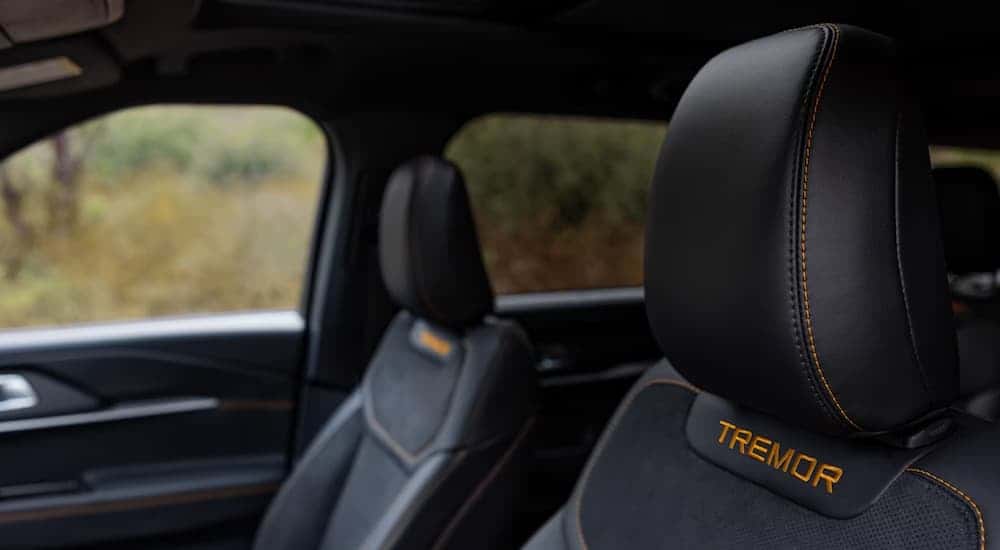
There’s only so much space you can fit within a vehicle, so finding the right balance between available cargo space and passenger space is an important focus for SUVs. Versatile cargo options like fold-down rear seating expand the available cargo capacity on both the Santa Fe and the Ford Explorer, ensuring you can carry everything you need.
Both models have three rows of seating for up to seven passengers. They also feature available captain’s chairs for up to six passengers, leaving space in the center of the middle row with personal armrests and easy access throughout the vehicle.
Hyundai Santa Fe: Three Comfortable Rows
The 2026 Hyundai Santa Fe’s boxier exterior design delivers a practical cabin with excellent passenger room and generous cargo space. With all three rows up, the Santa Fe’s trunk provides up to 14.6 cubic feet of cargo space. Folding the third row increases cargo capacity to 40.5 cubic feet, and folding both rear rows delivers 79.6 cubic feet.
This space ensures that the Santa Fe is particularly useful for families that alternate between carrying passengers and transporting cargo. Its spacious second row also gives passengers room to settle in comfortably, making the Santa Fe a well-rounded choice for everyday family transportation.
Ford Explorer: Unmatched Versatility of Interior Space
For 2026, Ford focuses on enhancing the comfort and interior space of the Explorer, with adaptable seating configurations and class-leading cargo flexibility. This approach to comfort across all three rows makes it a particularly appealing option for families who need an SUV that can accommodate a range of activities for the whole family.
Cargo capacity is one of the Explorer’s major strengths when compared to the competition. It offers 16.3 cubic feet of available space in the trunk, which can be extended to 46 cubic feet behind the second row, and an outstanding maximum capacity of 85.8 cubic feet with all rear seating folded flat.
Winner: The Ford Explorer
While both SUVs offer comfortable three-row configurations with versatile fold-flat seating options that can extend the available space, it’s clear that the 2026 Ford Explorer has the advantage over the Hyundai Santa Fe in terms of available space. For families who rely on spacious seating and versatile cargo space, the Ford Explorer is the right choice.
The Numbers Support the 2026 Ford Explorer
The 2026 Ford Explorer and the 2026 Hyundai Santa Fe are both undeniably capable three-row SUVs that encapsulate modern technology, cargo versatility, and practical interior space with every drive. Each model has its strengths, which is why it’s important to compare the objective differences through stats like engine power and cargo space.
The Hyundai Santa Fe makes a strong case, with a stylish, boxy design that features a comfortable and spacious interior. The flexible cargo area and impressive 311 lb-ft of torque from its turbocharged engine ensure you can tackle any number of weekend activities with ease, but these numbers simply do not compare to the Ford Explorer.
The 2026 Ford Explorer pulls ahead of the competition in two important ways:
- The available 3.0L twin-turbo V6 engine. By offering an exceptionally impressive 385 hp and 415 lb-ft of torque, the Explorer remains unbeaten with its incredible 5,000 lbs of maximum towing capacity.
- By analyzing the available interior cargo space, the Explorer pulls ahead once again, with a total of 85.8 cubic feet of maximum cargo space. Meaning it has an extra 6.2 cubic feet of space compared to the Santa Fe.
For drivers who need an SUV that can handle daily commuting just as easily as family road trips and weekend projects, the Ford Explorer’s numbers make a compelling argument. By combining impressive power with unmatched cargo flexibility, the 2026 Ford Explorer is our recommendation for your next midsize three-row SUV.

0 comment(s) so far on 2026 Ford Explorer vs 2026 Hyundai Santa Fe: Performance and Versatility Compared