



Experience Over Edginess: The 2025 Ford F-150 Lightning vs 2025 Tesla Cybertruck
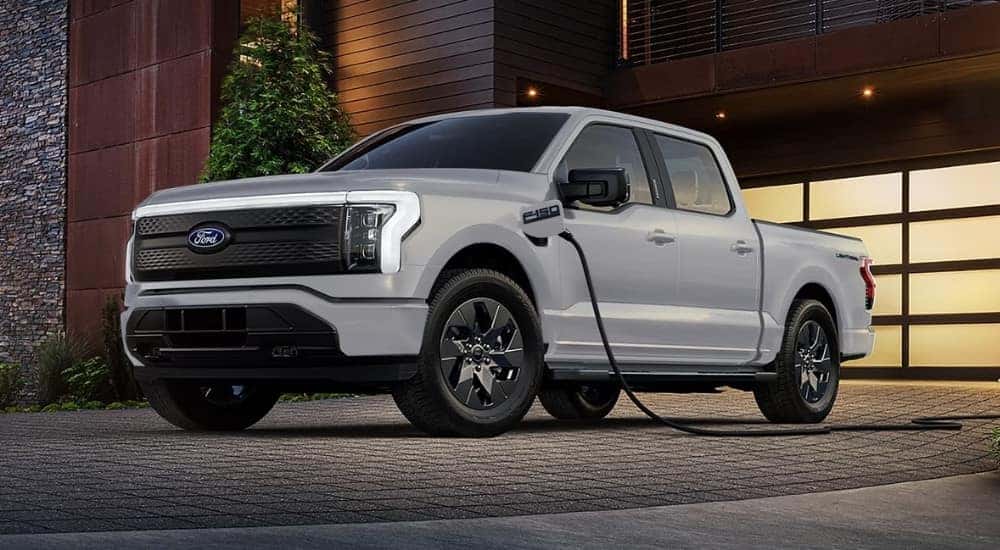
While they technically occupy the same full-size segment, the Ford F-150 Lightning and Tesla Cybertruck represent very different takes on the all-electric pickup. Ford has leveraged its extensive experience in the truck world to produce a well-rounded EV that checks most of the boxes when it comes to what drivers tend to look for in a pickup, and the feedback has been overwhelmingly positive. The F-150 Lightning was not only the first EV to win MotorTrend’s coveted “Truck of the Year” award, but it also earned similar accolades from the trusted critics at both Edmunds and Kelley Blue Book.
Then there’s the Tesla Cybertruck. The wedge-shaped EV has garnered plenty of attention since it was released in 2024, but it hasn’t all been positive. The divisive pickup certainly brings some new features to the table with its steer-by-wire system and shiny stainless steel body, but can it hope to compete with an EV from one of the industry’s most established and respected truck brands? Let’s consider that question as we pit the 2025 Ford F-150 Lightning vs 2025 Tesla Cybertruck and see which pickup EV has what it takes to get the job done.
Performance
If you expect an EV to trail behind its gas-powered brethren when it comes to performance, you haven’t been paying attention. Today’s automakers are embracing EV technology in some new and exciting ways, improving not only efficiency but also opening the door to some truly thrilling vehicles that offer immense power and rapid acceleration. When comparing EV pickups, it’s the number of motors and the size of the battery—not the engine displacement or cylinder count—that really determines how much power you’ll be able to access when you step behind the wheel.
The 2025 F-150 Lightning gets off to an impressive start with the base Pro trim offering a dual-motor setup and your choice of a 123-kWh or optional 131-kWh Extended Range battery. The smaller battery will net drivers 536 hp and 300 miles of driving range, while the 131-kWh version tops out at 580 hp and 320 miles of range. The Lightning XLT trim actually swaps out the Extended Range battery for a 98-kWh Standard Range alternative that delivers 452 hp and 240 miles of driving range. These stats might be a little confusing when compared to the base Pro trim’s own output and range, but the XLT’s higher cost can largely be attributed to the trim’s improved comfort, technology, and style features.
The Extended Range batteries allow the truck to tow up to 10,000 lbs, while the XLT’s Standard Range battery limits the Lightning to 7,700 lbs of towing, but the smaller, lighter battery does provide some upside as far as payload capacity is concerned, with a lineup-leading 2,000 lbs. Overall, it’s a strong showing for the 2025 F-150 Lightning, with Ford crafting a diverse lineup that allows drivers to select between no-nonsense work trucks, reliable models that are fun for the whole family, and luxurious trims like the Lariat and Platinum that come packed with premium features.
The 2025 Cybertruck offers a simplified trim ladder that leaves drivers with fewer options to choose from. The pared-back approach might appeal to those who struggle with decision-making, but it’s a bit underwhelming and even a little limiting when trying to source an EV that can serve a specific purpose. The 2025 model year kicks off the new Long Range RWD trim, which, unlike any of the current Lightning models, adopts the single-motor approach. This might help to reduce the truck’s cost, but the RWD setup is unlikely to blow any drivers away, given its pedestrian 315 hp and an estimated 354 miles of range thanks to a 123-kWh battery.
The entry-level Cybertruck’s RWD design could hold you back in off-road environments and isn’t exactly a ready-made towing rig (with 7,500 lbs of capacity), but it’s easily the most affordable of this truck’s trims, with a price tag around $10k less than the second-tier AWD trim. The Long Range AWD utilizes the same 123-kWh battery, but it adds a second electric motor to make 600 hp and a zero-to-60-mph time of 4.2 seconds (which is only slightly slower than the Lightning Platinum, at four seconds flat). Unfortunately, that speed comes at the cost of range, with the Long Range AWD failing to live up to its name at 325 miles. The AWD system is a nice touch, and this truck can tow 11,000 lbs, but having to spend upward of $80,000 to get all four wheels involved seems a bit much for a contemporary truck.
The range-topping Cyberbeast trim doesn’t exactly help Tesla’s case, with 320 miles of range, and while it does provide a potent 845 hp thanks to a tri-motor design and AWD, things get a little sketchy when you dive into the trim’s torque. Tesla claims the Cyberbeast can provide 10,296 lb-ft of raw twisting force, which would be cause for celebration if not for some questionable methodology. The brand seems to have achieved that figure by measuring torque at the wheels instead of the electric motors. A unique gearing system sees the motors’ estimated 686 lb-ft of torque multiplied as it moves through the powertrain, but many experts peg the actual figure closer to 864 lb-ft of torque when using a more common form of calculation.

Price
Aside from Cybetruck’s odd shape, the biggest difference between the two EVs comes down to the price. The Lightning might be a little more expensive than its gas-powered sibling, but the Tesla exists in a whole other tax bracket, with a price tag that can easily trend into six-figure territory. Drivers can get behind the wheel of the F-150 Lightning’s entry-level Pro trim for around $55k, but even the cheapest Cybertruck rings in at nearly $80k. That $25k disparity is no small chunk of change; in fact, it would almost be enough to finance the purchase of Ford’s compact Maverick pickup, and it forces Tesla into an uphill battle to justify the cost.
Sure, the Cybertruck might have a slight advantage over the F-150 Lightning in terms of horsepower, towing, and range (at least when it comes to the dual-motor models), but the gap certainly isn’t significant enough to explain Tesla’s inflated MSRP. While interior tech and comfort features can tend to eat up a lot of the budget, the Cybertruck’s famously spartan cabin doesn’t exactly rocket the truck into the luxury segment. So where does that extra $25k come from? Well, it can all be explained by a few simple factors.
The first and most obvious reason would be the Cybertruck’s stainless-steel body. According to Tesla, the exoskeleton design provides improved strength and durability, but it’s also extremely expensive to produce due to a manufacturing technique known as “air-bending.” Tesla initially claimed that the exoskeleton would double as the truck’s frame, which would have been an innovative approach had it been at all true. In reality, the Cybertruck’s stainless steel panels are actually hung on a unibody frame, which means the EV actually employs the same construction method used on today’s crossover SUVs.
The stainless steel exoskeleton would theoretically reduce lifetime repair costs by allowing the Cybertruck to better resist dents and corrosion, but it’s a whole different story when it comes to more significant damage. Larger dents and dings could necessitate replacing entire panels, as stainless steel is very difficult to repair, compared to traditional body panels.
While you have to credit Tesla for trying something new, the exoskeleton might actually hurt the Cybertruck’s practicality and increase ownership costs in the long run. The same goes for the Cybertruck’s steer-by-wire system, which, while it can improve safety and lower the EV’s total weight, is also a lot more complex and expensive to repair should something go awry.
Drivers also need to factor in the relative scale of Ford and Tesla. While Tesla has become the clear leader in the EV segment in terms of total output, the 22-year-old company simply can’t match the production capabilities of one of America’s oldest automakers. Ford produced over 4.5 million vehicles in 2024 while Tesla logged around 1.7 million units. That’s a solid showing for the EV brand, but even an automaker backed by the world’s richest man can’t boast the same global manufacturing capacity and supply chain resilience as the juggernaut that is Ford.
Ford’s sheer size, experience, and longstanding relationship with numerous parts suppliers allow it to keep production costs down and pass the savings on to the buyer. Tesla simply can’t match Ford’s track record and supply chain, and while the company does regularly offer discounts and sales, that only goes to show that the Cybertruck’s MSRP is a little inflated from the start.
Construction
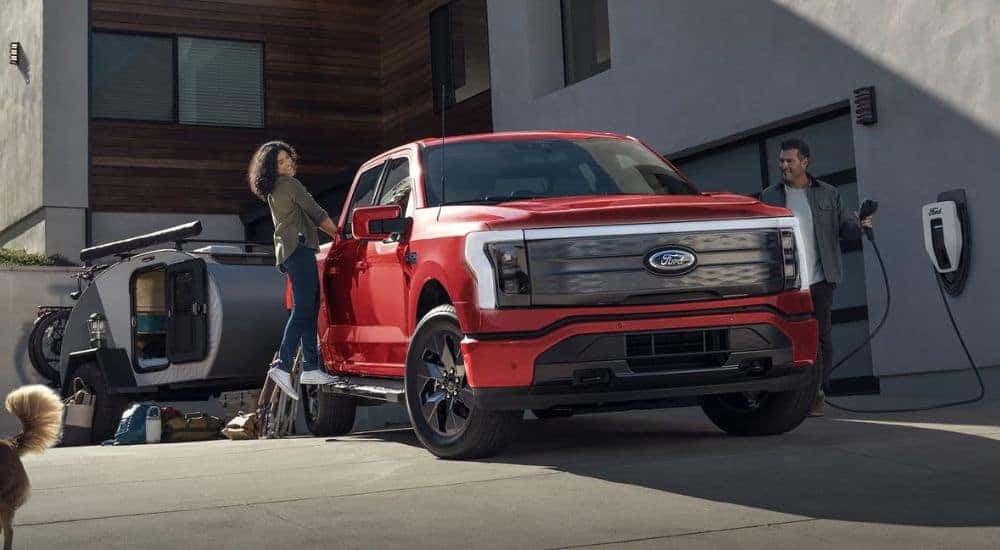
They say that it’s what’s on the inside that counts, and that couldn’t be truer in terms of today’s pickup. We glossed over a pretty important detail when discussing the specific construction methods used to produce the F-150 Lightning and Cybertruck, but it’s worth circling back to see what lies beneath the surface of the two EVs. Like many of the market’s best full-size pickups, the F-150 Lightning is built around a traditional body-on-frame (BoF) design that sees the truck’s body bolted to a separate steel ladder frame designed to carry the truck’s weight and distribute impact forces.
The BoF approach has been used on a wide variety of vehicles since the auto industry’s earliest days, and it offers some notable advantages in terms of durability, towing ability, and customization. The F-150 Lightning’s BoF design means it can better handle the stress and twisting forces that come with towing and hauling or off-road applications. It also provides some real advantages in terms of safety, as the frame can absorb impacts with minimal effect on those riding in the cab.
Body-on-frame construction is the ideal approach for a hardworking pickup, which is why Tesla’s decision to ditch the design is so confusing. Instead of embracing the BoF method for the Cybertruck, Tesla has opted for the unibody (or monocoque) construction method that’s used on most of today’s cars and SUVs. As the name implies, the body and frame are treated as one combined element in a unibody vehicle, which offers some benefits in terms of weight reduction, interior space, and overall comfort.
These three factors make the unibody method well-suited to smaller rides and family vehicles, which is part of the reason that unibody crossover SUVs have become such a popular choice over the last couple of decades, but they can actually work against you when it comes to the average pickup. Unibody vehicles like the 2025 Cybertruck simply can’t accommodate as much weight as their body-on-frame competitors, and they don’t offer nearly as much flexibility when it comes to aftermarket upgrades that you might want to install.
Likely the biggest downside of unibody construction involves the potential repair costs. In the event of a serious crash, a unibody vehicle might end up completely totaled if there’s significant damage to the monocoque itself. This represents a notable departure from BoF vehicles, which tend to be a lot easier to repair. Even if the F-150 Lightning’s body sustains some dramatic damage in a crash or off-road adventure, it could be a relatively simple repair so long as the frame wasn’t impacted. The same can’t be said for unibody vehicles, which is a pretty significant drawback when you consider the type of abuse that the typical pickup is subjected to throughout its life.
The Cybertruck’s unibody design does create more cargo space within the vehicle and provides a logical space to site the battery pack, but Tesla’s chosen construction method ultimately might have been more of a necessity than a proper choice aimed at creating a better truck. While the exoskeleton’s stainless steel construction includes thick, heavy body panels that weigh the truck down and impact its overall driving range and towing ability, the unibody design helps the EV to shed some vital poundage at the cost of actual utility, durability, and potential repair costs.
The E-Verdict
Drivers need to be honest about their intentions when choosing between the 2025 Ford F-150 Lightning and 2025 Tesla Cybertruck. If you’re looking for a full-size pickup that’ll ease the transition from your beloved gas-powered model to the exciting new world of EV technology, the F-150 Lightning is probably the way to go. From its more conventional shape to its body-on-frame design and off-road ability, the Lightning is adept at pulling off those feats of pickup strength that have long made the traditional F-150 America’s best-selling truck.
If you want something entirely different and are prepared to make the steep investment, the Cybertruck’s advanced construction methods and unique features are sure to hold some appeal for a particular set of drivers. That said, it’s difficult to see how the Cybertruck lives up to its inflated price in a rapidly evolving EV market. Tesla’s pickup has certainly created a lot of buzz, but it’s hard to ignore the fact that you might be paying a premium due to the truck’s current hype.
Some might argue that the Tesla isn’t a true truck, and while the jury is still out, it’s fair to say that this EV falls short in a few essential categories. Most importantly, it sure seems like the Cybertruck can’t compete on its merits and needs to resort to misleading torque stats and durability claims to make a case for itself. If you’re ready to experience a new era of truck technology that’s backed by the industry’s most experienced and successful pickup producer, head into DePaula Ford and experience the 2025 Ford F-150 Lightning for yourself.

0 comment(s) so far on Experience Over Edginess: The 2025 Ford F-150 Lightning vs 2025 Tesla Cybertruck