



How the 2026 Ford F-150 Embraces More Performance Options for Demanding Drivers
In the world of full-size pickup trucks, the definition of performance has shifted dramatically over the last decade. It used to be a simple question of horsepower and torque, but today, truck owners demand much more. You need a vehicle that serves as a mobile office, a heavy-duty hauler, a family road-trip vessel, and an off-road warrior. With such diverse demands, the idea of a “one-size-fits-all” engine is becoming obsolete. Yet, as we look specifically at the 2026 Ford F-150 vs 2026 Ram 1500, we see two very different philosophies emerging.
Ram is streamlining, cutting back, and simplifying their powertrain menu to four options, largely betting the farm on their inline-six architecture. Ford, however, recognizes that a contractor in Albany has different needs than an off-road enthusiast in the Adirondacks. That is why the 2026 F-150 doubles down on variety with a massive lineup of six distinct engines, making it the go-to choice for discerning truck drivers who demand variety in their engine options.
The Philosophy of Choice: Why More Is Better
When a manufacturer reduces your options, they are essentially telling you how to drive. Ram’s decision to drop the legendary HEMI V8 for the 2025 model year was puzzling, forcing loyalists into a corner. It’s a large reason why they brought it back in 2026. While the return of the HEMI V8 is an encouraging sign for Dodge, it is only available on select trims. This does not include the RHO, Ram’s high-performance, off-road-focused truck. Overall, the powertrain options are still quite limited compared to Ford.
Ford understands that there is no single “best” engine—only the best engine for your specific job. By offering naturally aspirated V8s, twin-turbo V6s, full hybrids, and supercharged monsters, Ford ensures that no buyer has to compromise.
The PowerBoost Hybrid: Efficiency Without Weakness
One of the most significant advantages the F-150 holds over the Ram 1500 is the 3.5L PowerBoost Full Hybrid V6. Ram currently offers mild-hybrid eTorque systems, which are essentially glorified start-stop assists, but they lack a true full-hybrid competitor. Ford’s PowerBoost is a game-changer because it refuses to treat hybrid as a dirty word in the truck community. It delivers a staggering 430 hp and 578 lb-ft of torque, numbers that rival heavy-duty diesel outputs from just a few years ago.
This powertrain delivers an electric punch off the line, making city driving incredibly smooth. When the twin-turbos spool up, the gas engine seamlessly takes over, providing effortless highway-passing power. But the real magic happens when the truck is parked. Because the PowerBoost utilizes a high-voltage lithium-ion battery, it enables the Pro Power Onboard system. This feature turns your F-150 into a mobile generator capable of outputting up to 7.2kW of exportable power.
Think about what that means for a job site or a camping trip. You can run air compressors, chop saws, and battery chargers all day without hauling a noisy, heavy portable generator in the bed. During a home blackout, your truck can power your fridge, freezer, and internet router for days on a single tank of gas. Ram’s Hurricane engines, for all their technology, simply cannot offer this level of utility. They are strictly propulsion devices, whereas the F-150 PowerBoost is an energy hub.
The 5.0L V8: Respecting the Legacy
There is an emotional component to truck ownership that spreadsheets and fuel economy ratings can’t capture. For decades, the American pickup truck has been defined by the sound and feel of a V8 engine. The rumble at idle and the linear power delivery are ingrained in the culture of truck enthusiasts. Ram turned its back on this legacy by eliminating the HEMI V8 from the 1500 lineup in the 2025 model year, leaving traditionalists with no option but to accept a six-cylinder. While it has been brought back for 2026, it is only available in select trims. This excludes the RHO trim, Ram’s high-performance, off-road-focused model.
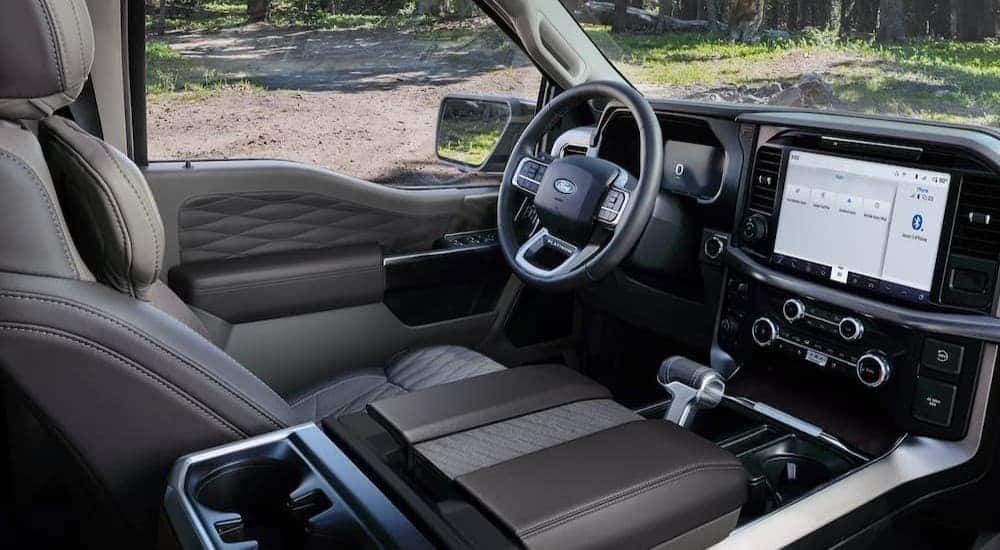
Ford respects the purist. The 5.0L Coyote V8 remains a staple of the 2026 F-150 lineup, serving as a bridge between classic truck virtues and modern engineering. Producing a robust 400 hp and 410 lb-ft of torque, the Coyote is a marvel of natural aspiration. It doesn’t rely on high-pressure turbochargers to make its power, which means there is no turbo lag, just instant throttle response.
For those who plan to keep their truck for ten years or 200,000 miles, the V8 offers peace of mind. Naturally aspirated engines generally have fewer failure points than high-strung turbocharged engines, as they operate under lower internal pressures and cooler temperatures.
The Turbocharged Workhorses: 2.7L and 3.5L EcoBoost
While the Hybrid and V8 get the headlines, the backbone of the F-150 lineup remains the EcoBoost family. The 2.7L EcoBoost V6 is the unsung hero for the daily driver. It is snappy, responsive, and incredibly fuel-efficient, making it the perfect engine for the truck owner who hauls materials on the weekends but commutes to Albany during the week. It punches well above its weight class, feeling faster and more agile than the base engines of the past.
Then there is the 3.5L EcoBoost V6 (non-hybrid). This is the engine for the serious tower that doesn’t want the complexity of the hybrid system. It is purpose-built for moving weight, with torque curves designed to stay flat and wide. This engine has been refined over nearly 15 years, proving its durability in millions of F-Series trucks.
The Raptor R vs Ram RHO: The King of the Hill
At the absolute peak of the truck market, we find the super-trucks. For years, the Ram TRX was a worthy adversary to the Raptor, utilizing a supercharged V8 to make its point. However, the TRX is now gone, replaced by the RHO (Ram High Output). The RHO uses a high-output version of the six-cylinder Hurricane engine. It is certainly powerful, but it has lost its soul.
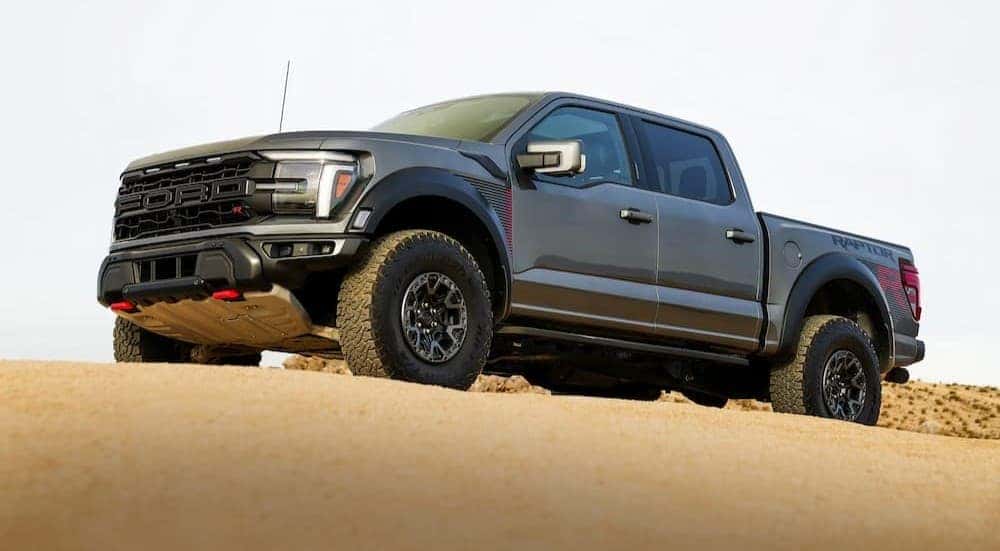
The 2026 Ford F-150 Raptor R does not compromise. It retains a 5.2L Supercharged V8 derived from the Mustang Shelby GT500. With 720 hp, it is the most powerful factory-produced internal combustion pickup truck ever. The difference between the Raptor R and the Ram RHO is not just in the spec sheet; it is in the experience.
When you step on the gas in a Raptor R, the whine of the supercharger and the roar of the exhaust create a sensory overload that a six-cylinder simply cannot replicate. Ram tries to argue that the RHO is lighter and more agile, but in this segment, presence matters. It’s also worth noting the Raptor’s 3.5L EcoBoost High Output V6, which offers an impressive 450 hp and 510 lb-ft of torque.
Towing Superiority: The 2,000-lb Gap
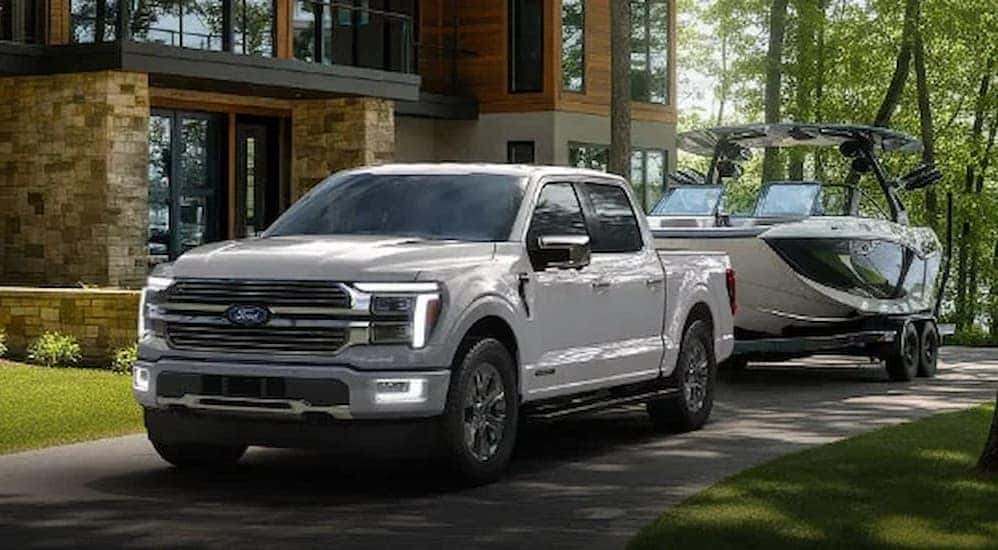
We cannot discuss truck engines without discussing what they are pulling. Towing capacity is the ultimate measuring stick for a pickup’s utility. When properly equipped, the 2026 Ford F-150 boasts a maximum towing capacity of 13,500 lbs. This figure is class-leading for a reason. It allows you to tow large travel trailers, boats, or dual-axle equipment trailers with a margin of safety that inspires confidence.
The 2026 Ram 1500, with its new engine lineup, maxes out at 11,610 lbs. That is a difference of nearly 2,000 lbs. To put that in perspective, 2,000 lbs is roughly the weight of a Smart car, a large pallet of concrete, or a fully loaded U-Haul trailer. That gap is massive.
Even if you aren’t towing 13,500 lbs every day, that extra capacity matters. It means that when you are towing a 9,000-lb boat, the Ford is operating further from its stress limit than the Ram is. The chassis, the cooling system, and the braking performance are all over-engineered to handle that higher peak. Towing near a truck’s maximum capacity is stressful and fatiguing for the driver. By having a higher ceiling, the F-150 makes medium-duty towing feel effortless.
When Performance Options Matter, Choose the 2026 Ford F-150
The contrast between the 2026 Ford F-150 and the 2026 Ram 1500 is stark. Ram is asking you to compromise, offering a “take it or leave it” approach with a limited engine lineup. Ford, on the other hand, empowers you. The 2026 F-150 lineup is a testament to the belief that the customer knows best. Whether you prioritize the efficiency of the PowerBoost, the 720 hp of the Raptor R, or the classic rumble of the Coyote V8, there is an F-150 built exactly for you. You don’t have to settle for a truck that is close enough to what you want.
At DePaula Ford, we are proud to stand behind a brand that values variety and capability above all else. We invite you to come down to our showroom and see these F-150s in person. Pop the hoods, hear the engines run, and feel the difference that the power of choice makes. Don’t let a manufacturer limit your potential; drive the truck that gives you more.

0 comment(s) so far on How the 2026 Ford F-150 Embraces More Performance Options for Demanding Drivers