



Off-Road Throwdown: 2026 Ford Bronco vs 2026 Toyota 4Runner
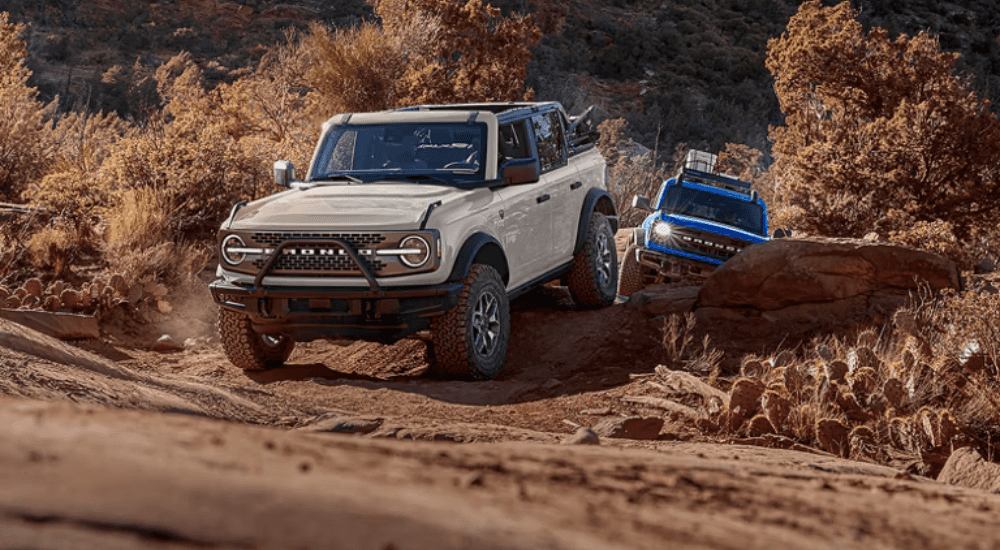
When the going gets tough, the tough turn to body-on-frame SUVs like the Ford Bronco. This iconic off-roader has provided plenty of thrills over the decades, and basically coined the term “Sport Utility Vehicle” all the way back in 1966.
The Bronco galloped back onto the scene in 2021 after a 25-year sabbatical and has quickly raised the bar in the off-road segment. The original SUV celebrates its 60th birthday in 2026, with Ford rolling out a 60th Anniversary Package that boasts impressive off-road capability to complement its classic style.
The Bronco is about as spry as they come at 60 years old, but how does it stack up with another one of the industry’s top off-road options, the Toyota 4Runner? From performance and design to ground clearance, water-fording, and more, join us as we pit the 2026 Ford Bronco vs 2026 Toyota 4Runner in five key off-road categories.
Power and Performance
Simply pop the hood, and you’ll quickly be able to spot one of the key differences between the Ford Bronco and Toyota 4Runner. While both models employ relatively similar, four-cylinder turbocharged base engines, Ford has managed to squeeze a lot more power out of the Bronco’s mill.
The iconic Ford SUV delivers 300 hp and 325 lb-ft of torque compared to 278 hp and 317 lb-ft in the 4Runner. That’s a little tough to explain, considering that the Bronco’s engine is smaller at 2.3L to the 4Runner’s 2.4L, but it does serve as a compelling illustration of Ford’s engineering prowess.
The Toyota’s available i-FORCE MAX hybrid powertrain trends a little closer, with 326 hp compared to the 330 hp you’ll find from the Bronco’s optional 2.7L V6, but it’s a classic case of too little, too late for the midsize SUV. We’ll leave the Bronco Raptor out of the equation, because while the high-performance model is capable of producing 418 hp and 440 lb-ft of torque, its powerful potential skews the data too far in Ford’s favor.
When you put the pedal to the metal, even the base Bronco responds in kind with a zero-to-60-mph time of 7.1 seconds, while the V6 Bronco can hit 60 in 6.2 seconds. The 4Runner takes around 7.5 seconds, which is even slower than the 7.4 seconds you can eke out of a manual Bronco. If you’re looking to add a little excitement to your daily driving routine or need an off-road SUV that can power through any obstacles, it’s time to saddle up the Bronco.
A Manual Transmission
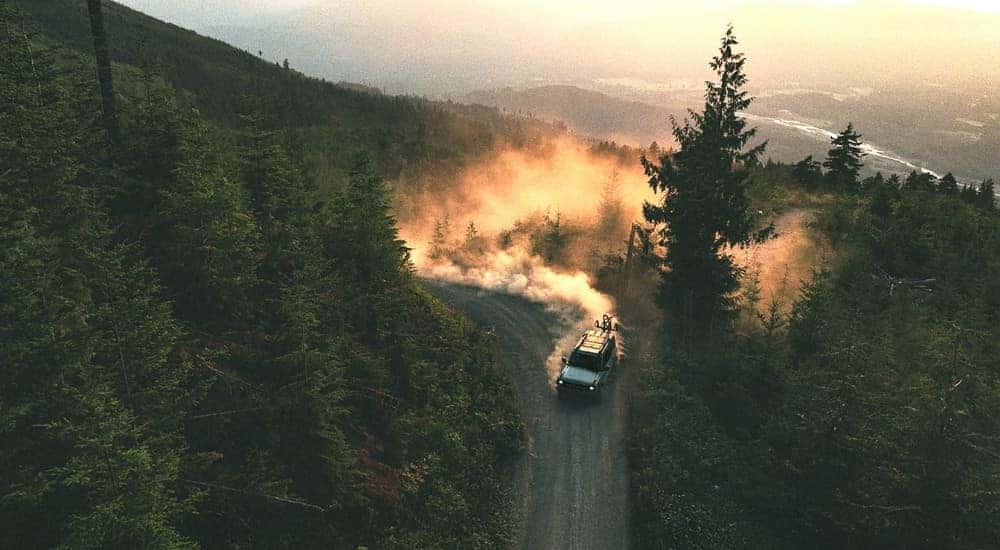
Sometimes they’re just no substitute for the old-school approach. While modern automatic transmissions have undoubtedly made life a little easier, there are still some inherent advantages that make a manual tough to beat in off-road scenarios.
Control is key when you’re venturing into unfamiliar territory, and the 2026 Bronco’s available seven-speed manual gives drivers the chance to exert their will when they’re behind the wheel. Maybe you want to hold a gear a little longer to avoid a sudden shift when trying to overcome a tough obstacle, or perhaps you want to stay in a low gear while rolling downhill to take advantage of some engine braking.
If you need to scale a sheer rock face or an imposing boulder, the ability to feather the clutch to precisely dole out power can really come in handy. No matter the reason, the Bronco’s manual transmission has you covered. Manuals also tend to be more reliable than their automatic counterparts and, if something goes wrong, are usually a whole lot cheaper to fix.
In contrast, Toyota hasn’t offered a manual option for the 4Runner since 2000, which is a bit disappointing. If you want to row your own gears, the Bronco is your only option here.
More Ground Clearance
Horsepower and MPG are usually the two most relevant metrics when shopping for a new car, truck, or SUV, but the same can’t be said for the off-road segment. If you’re venturing off the grid, traction and ground clearance should really top your list of automotive priorities.
A dependable supply of low-end power can make all the difference when trying to overcome loose, slippery terrain, and the Bronco doesn’t disappoint with its available electronically locking front and rear axles. The 4Runner falls a little behind here as it lacks a front locker, but if there’s one area where the Toyota truly lags behind the Bronco, it would have to be ground clearance.
When paired with the available Sasquatch Package, the Bronco floats 11.6 inches above the ground. That’s a pretty valuable attribute when you’re trying to avoid rocks and logs, and it leaves the 4Runner looking up at its fellow midsize model. The 4Runner maxes out at 10.1 inches of ground clearance when opting for the Trailhunter or TRD Pro, and the rest of the lineup is a bit height-challenged at 8.2 inches.
Finally, there’s the issue of angles. Ground clearance helps keep crucial underbody components from making contact with the road, but it’s a vehicle’s approach and departure angles that determine how much damage the bumpers will incur as you’re navigating a steep grade. The Bronco Sasquatch is no slouch with an approach angle of 43.3 degrees and a departure angle of 37 degrees. You’ll have to be a little more careful when it comes to the 4Runner, which is limited to a 33-degree approach angle and 24-degree departure angle.
Deeper Water Fording
When your off-road journey starts to get a little wet and wild, you need an SUV that isn’t afraid of some moisture. Even the most well-planned route can leave you soaked when sudden storms or seasonal thawing cause waterways to rise, but Ford has engineered around this issue when it comes to the Bronco.
Ford’s off-road SUV is designed to ford up to 33.5 inches of water, which could mean the difference between successfully reaching your destination and throwing in the towel. In contrast, the 4Runner’s fording depth maxes out at 27.5 inches. While the 4Runner Trailhunter comes with a high-air intake, if you read the fine print, you’ll find that this system is not actually intended to improve fording depth.
The Bronco’s water-resistant design might allow for some aquatic antics, but it’s important to remember a few simple tips when encountering a saturated scenario. Always enter in a low gear, maintain momentum to create a small bow wave that’ll keep water from entering the engine compartment, and keep the revs high to prevent stalling. Also, always check the depth before any attempted crossing and give the brakes a quick test squeeze as soon as you exit the water.
Classic Configurations
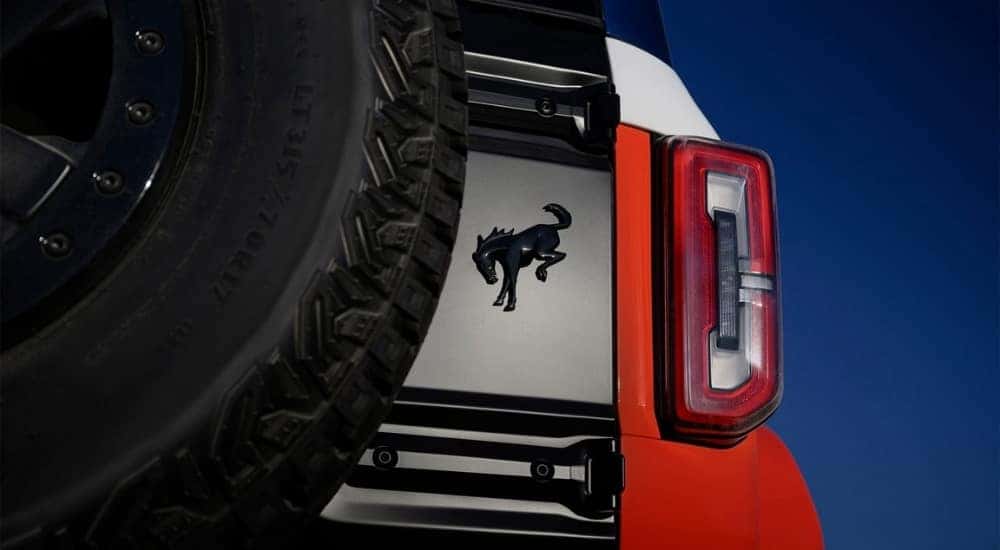
Shopping the off-road segment allows drivers to enjoy the sort of customization that’s often tough to find on today’s market. Vehicles designed solely for paved surfaces tend to stick to a pretty standard formula, but the Bronco is a different breed, offering both two-door and four-door configurations.
Drivers also tend to spend most of their automotive life shielded from the elements. That’s fine for most applications, but off-roading is a different story altogether. Removable doors and windows have been a staple of the off-road segment since its earliest days, and mark a major selling point for adventure-seeking drivers who want to get up close and personal with Mother Nature.
Every 2026 Bronco comes with removable doors and roof panels, giving owners the opportunity to get a little fresh air when the mood strikes. The removable elements aren’t just a boon to the Bronco’s style credentials; they also improve visibility in off-road scenarios and enable drivers to spot debris, wildlife, and other obstacles that they might otherwise miss.
The Toyota 4Runner lacks this key feature, though it does boast one unique design element in the form of a retractable rear window. It’s no match for the Bronco’s open-air potential, but it does fit the SUV’s outdoorsy ethos.
Start Your Adventure at DePaula Ford
Sometimes it takes a little fresh blood to prove how stale things have become. The off-road SUV segment was sort of resting on its laurels before the Bronco burst back onto the scene, with the Toyota 4Runner and Jeep Wrangler representing the only true, factory-built adventure rigs. The Bronco puts the two models on notice, and while there’s no way to prove that the sixth-gen 4Runner was created in direct response to the Bronco, the timing does seem a little suspicious.
A little competition never hurt anyone, and if you subscribe to the old proverb about steel sharpening steel, the Bronco’s revival might be the best thing that’s ever happened to the segment. The 2026 Bronco outpaces its rival at every turn, delivering a more powerful, more customizable off-road SUV with unbeatable ground clearance and water-fording ability. Throw in classic features like the removable roof and doors, and it’s easy to understand how the Bronco has developed such a loyal following.

0 comment(s) so far on Off-Road Throwdown: 2026 Ford Bronco vs 2026 Toyota 4Runner