


What Model Years to Look for When Shopping for a Used Ford Ranger
The Ford Ranger has had one of the most unusual histories among American-made automobiles. In fact, this one truck perfectly demonstrates the changing trends in US automotive manufacturing over the past five decades. Making its debut in 1983 as a sporty light truck, the Ranger disappeared after the 2009 model year, only to return in 2019 as a midsized pickup truck. Since then, the Ford Ranger has adopted a variety of personalities to appeal to a wide range of drivers.
Therefore, when looking for a used Ford Ranger for sale, you may find yourself trying to figure out which generation to focus your search. While each year of the Ranger has plenty of merit, let’s take a closer look at each generation to determine which might meet your needs the best. After all, there are plenty of used Ranger years to shop through. Take a look at this handy guide to determine which are the best years of the Ranger for you to check out.
A Brief Review of the Early Years
While most drivers today aren’t shopping for a used 1983 Ford Ranger for their daily commute, the earliest years of the Ranger set the tone for Ford’s overall intentions for this vehicle as a basic yet versatile truck for those looking for a lot of vehicles for the money. The very first generation of the Ranger was offered in five trims, though a few variations weren’t far behind. The base S trim was designed for fleet sales with only the bare basics. In 1983, that meant vinyl upholstery, manual transmission, and folding side mirrors. Only 4×4 models included a tachometer.
The Ranger STX 4×4 was introduced on the West Coast in 1987, with nationwide sales the following year. Outfitted with a sport suspension, larger tires, AM/FM stereo with a clock, and a two-tone color palette, this was the coolest Ranger to date… until the GT appeared the next year. The Ranger GT became the original template for the American “sport pickup.” The GT was exclusively a regular cab, two-wheel drive version of the Ranger. With a 2.9L V6 under the hood, the Ranger GT had a choice of 5-speed manual or 4-speed manual transmission and made a zippy 140 hp. But there was more to the GT—like front and rear anti-roll bars, performance tires, and a limited-slip differential.
The second generation Ford Ranger appeared in time for model year 1993, and while it gained some of the technological advances of the time, it was still considered very much a sporty, adventurous small pickup truck. A SuperCab version with a short bed was introduced, which marked the first time a Ranger offered a power-operated driver seat as an available option.
At the same time, the new Ford Ranger Splash was making its own ripples. Marketed towards younger generations of drivers, the Splash was considered the Ranger’s “party truck.” The monochromatic paint scheme introduced bright 1990s colors to the truck scene, with bumpers and mirrors that matched the body color. It was truly a glorious time to zip around town in a small, versatile pickup truck, and for those looking for a project vehicle that perfectly captures the spirit of the early 1990s, the Ranger Splash is absolutely ideal.
A New Generation for a New Millennium
Unfortunately, the 1990s trends ended before the decade did. By 1998, the small, youthful, zippy cars were no longer in style—it was time for the Ranger to grow up and get a job. The third generation Ranger launched in 1998 with a fully redesigned frame, larger cab, and longer wheelbase. There was no STX and GT to keep the excitement going, and the lineup was reconfigured to the Splash, XL, and XLT, which came in a variety of options.
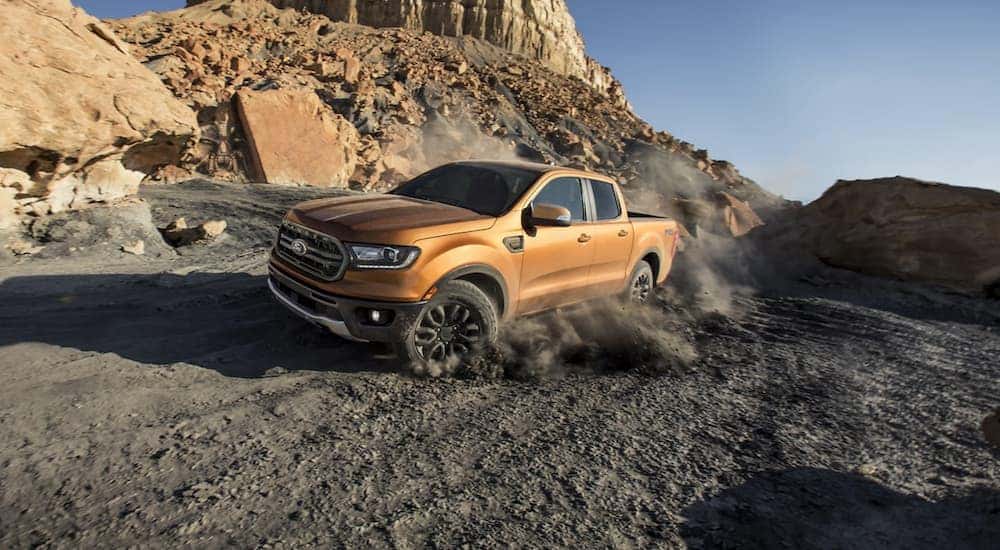
The Ranger FX4 made its first appearance in 2002, bringing the Ranger into serious off-roading territory. A standard 4.0L V6 engine, limited-slip rear differential, skid plates, and heavy-duty rubber floor mats meant this truck was ready to see what lies beyond where the pavement ends. These early FX4 models are sought after today by drivers looking for a budget truck to customize into their own personal off-road beast.
Those who are more safety-focused may want to shop for a Ford Ranger produced after 2007. This was the first year the Ford Personal Safety System was standard on all trims. While passenger airbags were first made an option in 1996, the 2007 Ranger included standard front airbags, a tire pressure monitor, and the SecuriLock anti-theft system.
Throughout the third generation, the Ford Ranger maintained a respectable reputation by making very few changes. The standard engine throughout this generation was a 143 hp 2.3L inline-4, though a 3.0L V6 and a 4.0L V6 (148 and 207 hp, respectively) were available throughout the lineup. The tachometer finally made it onto all models, and a thumping Pioneer audio system kept drivers and experts alike enchanted with the basic-yet-just-right era of the Ranger.
The third-generation Ford Ranger remains extremely popular with drivers who are looking for a light-duty truck with straightforward performance and streamlined features. However, it might be hard to find a Ford Ranger from this generation—after 2011, the Ranger was discontinued, and it was another eight years before the beloved truck would return. Drivers who cherished the versatility of their early model Ranger trucks are likely driving them still.
The Ranger Makes Its Triumphant Return
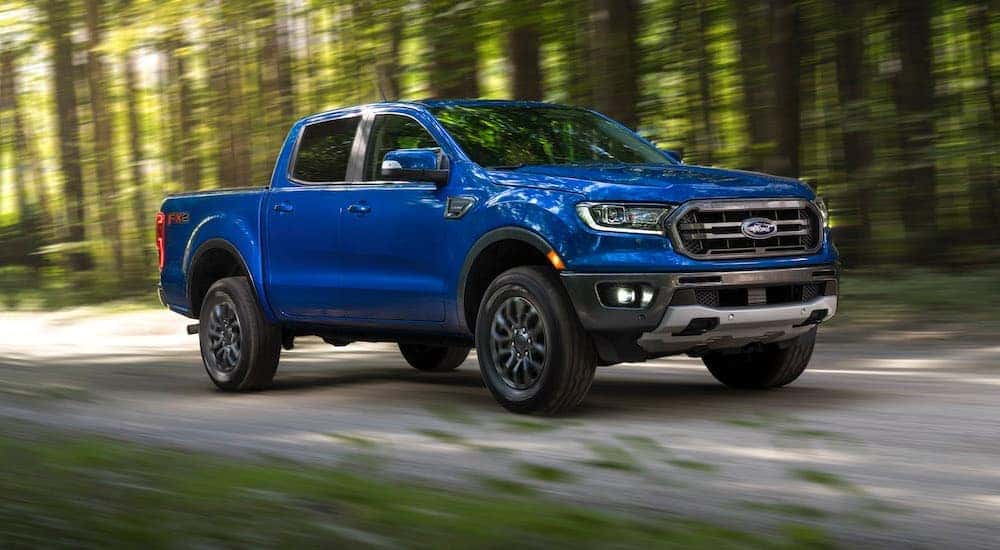
Most of the used Ford Rangers for sale today are from the latest fourth generation. Following its 2019 return to market, the Ranger is no longer small, with the capability to tow up to 7,500 pounds and standard seating for four or five passengers. SuperCab models provide two rear seats, while SuperCrew models offer a family-sized rear seat. When the 2019 Ford Ranger made its grand reappearance, it brought with it the 2.3L inline-4 engine. However, the modern iteration of this engine has been turbocharged and re-tuned to provide 270 hp and 310 lb-ft of torque.
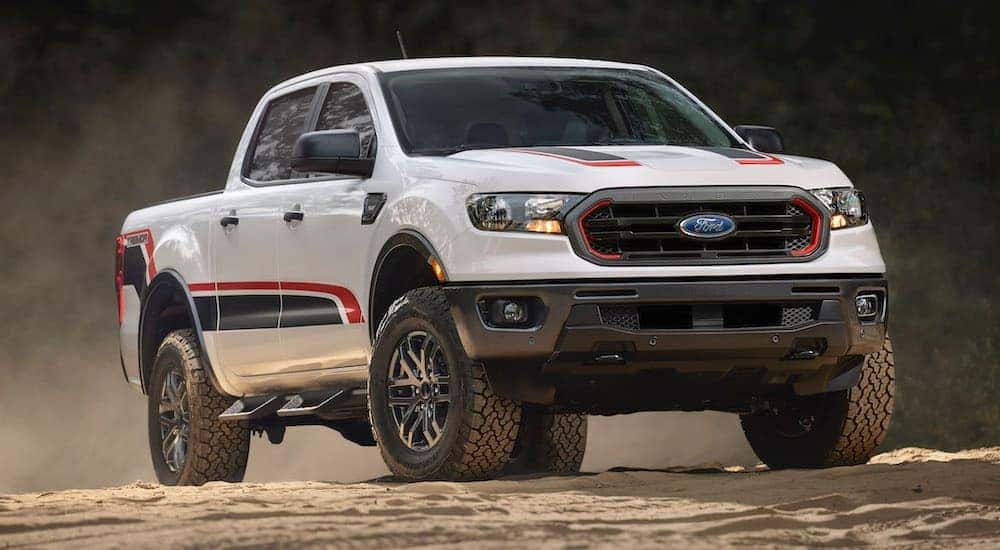
The new generation of Ranger also has a renewed sense of responsibility, with the Ford Co-Pilot 360 safety system offered on XLT trims and above. Airbags and tachometers are standard across the lineup, along with Bluetooth connectivity. Despite being all-new, the fourth-generation Ford Ranger has the same spirit of adventure as its ancestors. Options like the FX4 Off-Road Package for all-wheel drive models, the FX2 package for rear-wheel drive models, the Tremor Off-Road package with its specialized Fox suspension, and the current trail-dominating Ranger Raptor have all been fourth-generation developments.
Which Model Years Should You Look Out For?
Ultimately, the best Ford Ranger for you is the one that fits both your drivestyle and budget. Many drivers will gravitate towards the most recent generation. Used Ford Ranger models produced between 2019 and today will have the most up-to-date technology, engineering, design, and features.
At the same time, drivers who are interested in an older vehicle that retains the small size/big adventure spirit of the original Ford Ranger may wish to shop for the third generation. Though vehicles from the early 2000s may need a little love and have higher mileage as used vehicles, many third-gen Ranger drivers still drive their vehicles past 250,000 and even 300,000 miles. The Ford Ranger has always been more than a truck—it’s a lifestyle. And with so many used Rangers to choose from, it’s just a matter of finding your ultimate match.

0 comment(s) so far on What Model Years to Look for When Shopping for a Used Ford Ranger